
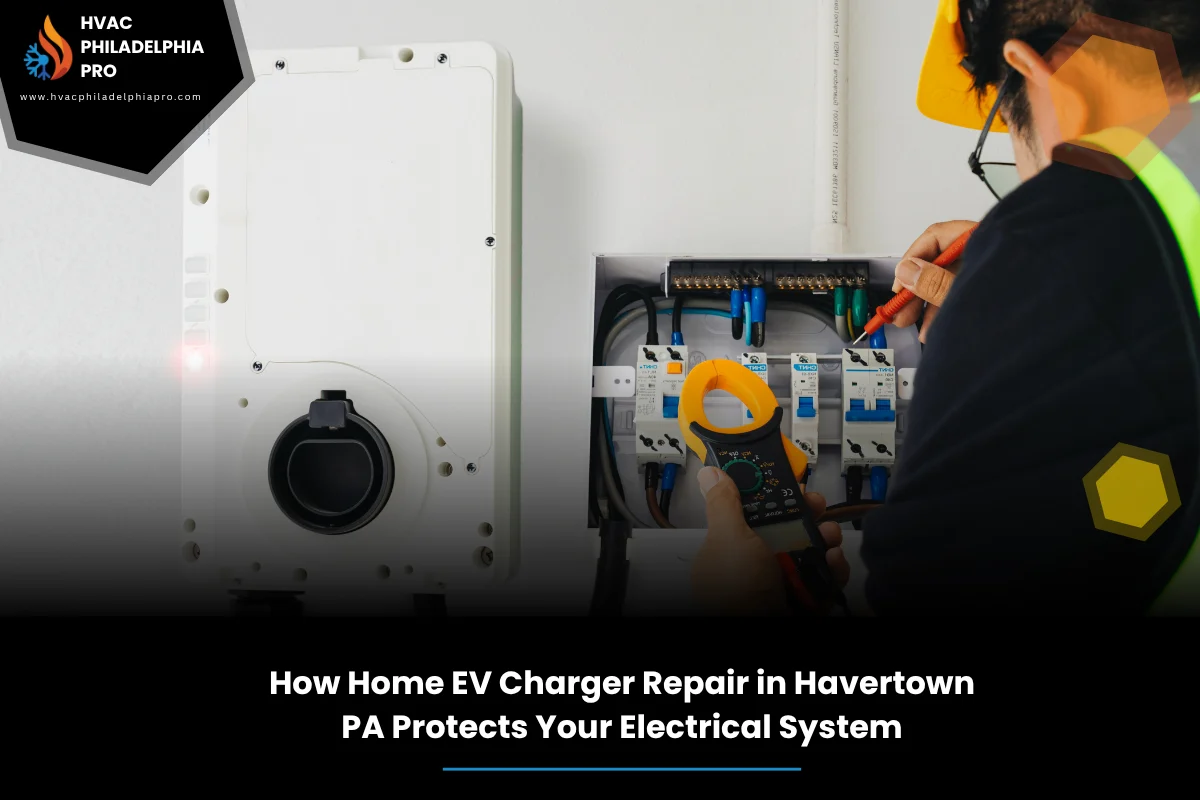
Your EV puts steady demand on your panel every time you plug in. If something is off, heat builds, breakers trip, and wires wear down. Timely fixes and smart setup protect your home. At HVAC Philadelphia Pro, we focus on safety first and simple steps that keep your gear running right. You may hear advice online, but real homes behave differently. Let’s walk through what matters and why it helps.
If you want details about scheduling or scope, read about home EV charger repair in Philadelphia in general, then explore options and timing with home EV charger repair in Philadelphia so you choose the right next move for your setup.
Table of Contents
Quick Summary
EV chargers draw strong, steady current. That steady pull exposes weak links fast: loose lugs, tired breakers, undersized wire, or bad grounding. Fixes that target heat and imbalance do the most good. Think clean terminations, correct breaker sizing, solid grounding, and ground fault protection that trips when it should. These steps cut risk and keep charging stable.
In Havertown PA, many homes mix old wiring with newer add-ons. That blend needs a careful check before and after any repair. Watch for nuisance trips, warm outlets, buzzing at the panel, or charging sessions that time out. Address root causes, not just the symptom. For a bigger picture, the complete guide to EV charger repair in Philadelphia PA for homes and businesses covers broader repair themes that support the ideas below.
Why EV charger faults strain your home electrical system
EV charging is a long, steady load. If any part of the circuit is weak, heat builds at that spot. Over time, that heat degrades insulation, loosens screws, and raises resistance. The result is a snowball effect: more heat, more wear, and more trips.
When you spot symptoms early, you can stop the chain. A correct breaker type, tight terminations, and verified ground fault protection protect the circuit while you charge. For a deep dive on repair patterns and common fixes, see the Complete Guide to EV Charger Repair in Philadelphia PA for Homes and Businesses as you map your next steps.
Common signs: EV charger breaker trips and power failures
When an breaker coordination issue shows up, your EV charger circuit may trip while lights stay on elsewhere. If the EV charger circuit breaker keeps tripping, do not increase breaker size to mask the problem. That only hides heat and raises risk. Find the true cause first.
An EV charger power failure can come from a loose neutral, a weak breaker, or an overheated plug. It can also point to a ground fault. Some chargers show fault codes that hint at the issue. Note the code and the conditions when it fails, such as rain, a hot garage, or other appliances running.
Write down patterns. Do trips happen near full charge or right at start-up? Does the garage feel warm at the outlet? These clues help you solve fast without guesswork.
Havertown PA homes: what local setups often look like
Havertown PA homes often mix older service panels with upgrades like new kitchen circuits, minisplits, or basement outlets. That mix can squeeze spare capacity. In some cases, the EV charger shares space with other heavy loads like a dryer or range.
Before you add or repair, check panel capacity and look for double-tapped breakers, back-stabbed receptacles, or handyman splices. Clear these weak links first. That way, your EV load has a clean path, and fixes last longer.
If your garage outlet looks worn or discolored, stop using it for charging until it’s inspected. Heat marks signal a poor connection that needs fast attention.
Root causes: load, terminals, and protection
Many ongoing trips come down to a poor load calculation. If the panel is near its limit during peak hours, the charger pushes it over. Loose or under-torqued lugs at the breaker or outlet also create hot spots that worsen under steady EV draw.
Wire size matters. A long run with smaller gauge wire can sag voltage, heat up, and trigger the charger to stop. GFCI and AFCI devices reduce shock and fire risks, but they must match the circuit design, location, and charger type.
According to the U.S. Department of Energy Energy Saver (2023), Level 2 charging should use a dedicated circuit and proper installation to handle continuous load safely. Charging at home
Protection checklist that actually prevents problems
First, confirm tight, clean terminations at the panel, disconnect, and charger. Any oxidized or burned copper must be cut back and re-terminated. Replace damaged devices instead of trying to salvage them.
Add whole-home surge protection to reduce wear from voltage spikes that stress EV electronics and breakers. Verify bonding and grounding at the service and subpanel. Check for moisture paths in exterior conduit, which can trigger faults during humid weather.
After repairs, perform a thermal scan during a full charging session if possible. A quick heat image can reveal a hot connection you cannot see by eye.
Step-by-step diagnostic framework for safe troubleshooting
Use this simple path to pinpoint issues and fix them in order. It saves time and avoids chasing the wrong part.
Step 1: Power down the EV charger circuit and apply GFCI testing at the device or breaker. Confirm the device trips and resets as designed. Inspect lugs for tightness and signs of heat.
Step 2: Verify wire gauge and breaker size match the charger specs. If the run is long, test voltage at the charger while under load to spot sag. Note any voltage drop beyond normal levels.
Step 3: Inspect grounding and bonding continuity. Loose or missing bonds can cause nuisance trips and equipment errors. Confirm polarity at receptacles for plug-in Level 1 use.
Step 4: Run a controlled charge and monitor temperatures at the breaker, outlet, and charger connector. If trips happen at a certain time, check what other loads start then, like a dryer or oven.
For a deeper walk-through of failure modes, prevention tips, and wider scenarios, compare this framework with the complete guide on this topic to round out your plan.
DIY vs calling an EV charger electrician in Philadelphia
Homeowners can safely handle basic checks like listening for buzzing, feeling for warm covers, and noting error codes. You can also test GFCI buttons, replace a worn cord on portable chargers, and clear dust from vents.
Call a pro when work involves live panel work, new wiring, breaker swaps, conduit, or permits. A qualified electrician will size the circuit, verify torque, confirm device ratings, and document results. This keeps insurance and warranty support intact.
When you explain symptoms, use simple terms and timing. Say when the trip happens, what else was on, and any weather factors. That story speeds up diagnosis and cuts repeat visits.
How charger types affect your panel: a quick comparison
Different chargers stress your system in different ways. Understanding continuous load and duty cycle helps you match gear to your panel and wiring.
| Charger type | Typical circuit | Panel impact notes |
|---|---|---|
| Level 1 plug-in | 120V dedicated 15–20A | Low draw, long time charging; watch outlet heat and cord quality |
| Level 2 hardwired | 240V dedicated 30–60A | Steady medium-high load; needs correct wire size and breaker |
| Smart Level 2 with load share | 240V, managed | Balances draw; reduces trips when household loads spike |
Preventive maintenance that keeps charging stable
Set a simple schedule. Every six months, tighten accessible terminations, dust vents, and test GFCI or breaker buttons. During a full charge, use the back of your hand to check for warm covers at the outlet, disconnect, and panel.
Log any trips with time, weather, and what else was running. This data turns random faults into a pattern you can fix. Adding a smart energy monitor also helps you see spikes and balance loads.
Think of preventive maintenance as cheap insurance. Small tune-ups prevent big problems, extend charger life, and protect the rest of your electrical system from hidden heat damage.
FAQs
- Why does my EV charger circuit breaker keep tripping?
It may be an overloaded circuit, a loose connection creating heat, a ground fault, or a breaker that has weakened over time. Find the root cause first. Do not upsize the breaker without verifying wire size and device ratings.
- What is the safest first step when my charger stops mid-session?
Stop charging, power down the circuit if possible, and let things cool. Check for heat or discoloration at the outlet and panel cover. Note any error code. These steps reduce risk and guide a focused repair.
- Can I plug a Level 2 charger into any 240V outlet?
No. Level 2 chargers need a dedicated circuit sized for the charger and wire length. The outlet or hardwired connection must match the charger specs and be installed correctly.
- Do I need GFCI protection on an EV charger?
Yes, ground fault protection is part of a safe design. Some chargers include internal GFCI, while others rely on a GFCI breaker or device. Do not double up protections that conflict; follow the charger instructions.
- Why does my charger fail more on humid or rainy days?
Moisture can enter conduit or fittings and trigger ground faults. Outdoor boxes and fittings must be rated and sealed. If trips align with rain, check gaskets, weep holes, and outdoor junctions.
- Is it normal for the charger plug to feel warm?
Slight warmth can be normal during long charging. Hot to the touch is not. Heat points to resistance from a loose contact, worn outlet, or damaged cord. Stop and inspect before reuse.
- What information should I share with an electrician?
Share the charger model, circuit size, panel brand, error codes, when trips happen, and any other heavy loads running at that time. Photos of the panel and outlet also help.
- How often should I test my charger’s safety features?
Test GFCI and any test buttons monthly. Do a deeper visual check every six months and after any storm or brownout. Keep a short log to spot trends early.
Conclusion
Charging puts steady pressure on your wiring, so small weaknesses show up fast. Solid repairs, right-sized circuits, and proven protections stop heat and trips before they spread. If you pay attention to patterns and fix causes, your panel, outlets, and charger all last longer with fewer surprises.
If you need guidance on planning or timing, look into home EV charger repair in Philadelphia best practices and match them to your Havertown PA setup. Contact HVAC Philadelphia Pro for expert assistance. Use the steps in this guide, keep notes on any trips, and make small tune-ups part of your home routine so charging stays safe and smooth.
continue reading
Related Posts
Learn how to choose EV charger repair near me with clear safety checks, a simple shortlist framework, and provider comparisons so you can fix issues fast and right.
Power failures can freeze business chargers. Learn fast triage, common faults, and safe fixes for Marlton NJ sites, plus when to use emergency EV charger repair in Philadelphia.
Practical guidance for Springfield PA businesses on EV charging station repair in Philadelphia, with fast triage steps, safety basics, network vs standalone tips, and industry-specific advice.