
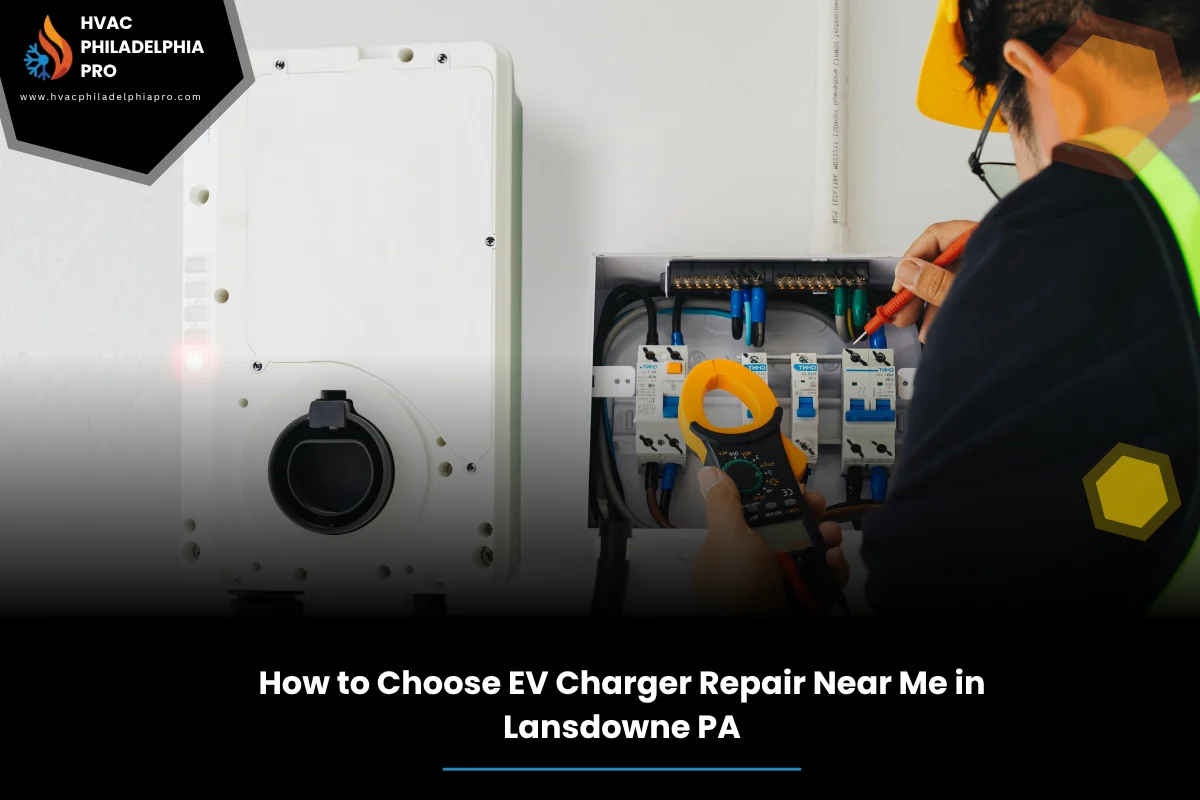
When a home charger stops working, your day stalls with it. You need fast answers, not guesswork. Searching for EV charger repair near me brings a flood of names, ads, and mixed advice. This guide shows how to cut through the noise, check a few basics, and pick a qualified pro who fixes the real problem the first time.
If you prefer to speak with a local technician and set up a visit, try EV charger repair near me and compare what’s offered. Keep the steps below handy so you know what questions to ask and what signals to look for before booking.
The team at HVAC Philadelphia Pro handles electrical and charging issues every day across the region. In this article, we stay neutral and walk you through practical checks, safety must-haves, and a simple framework to build a reliable shortlist.
Table of Contents
Quick Summary
Start with safety. Check the breaker, outlet, and cable for damage. Confirm Wi-Fi, app settings, and the car’s charge limits. If basics look fine, your next move is a proper diagnosis. Look for proof of training on your charger brand, test equipment, and clear reporting. Ask about parts access and turnaround for common failures.
Use a focused process to choose a pro: screen for licensing and insurance, verify brand experience, ask about their diagnostic workflow, compare response times, and confirm warranty terms in writing. We also explain how to weigh repair vs replacement and avoid common myths that waste time and money.
What “EV charger repair near me” really means
The phrase sounds simple, but the scope of work can be wide: outlet repairs, wiring faults, breaker sizing, GFCI trips, failed relays inside the unit, or software bugs. A good provider tells you what they can and cannot fix, and when to involve your car maker or the charger brand.
For a deeper dive into parts, faults, and workflows, see the Complete Guide to EV Charger Repair in Philadelphia PA for Homes and Businesses and use it as a reference while you compare providers.
Signs you need a pro and what to check first
Start with the easy wins. Make sure the breaker is on and sized right for the charger. Inspect the cable and connector for heat marks or cracks. Confirm the unit’s LEDs or screen aren’t flagging a code you can clear with a safe reset from the manual.
Next, confirm the car isn’t limiting charge rate. Check schedules in the app and in the vehicle. If the charger is plugged into a GFCI outlet, test and reset it. Reboot the Wi-Fi router if your charger depends on the network for updates or load management.
Call a professional if the breaker keeps tripping, the unit clicks but won’t start, there’s a burning smell, or the charger shows fault codes that return after a reset. These often point to internal components or wiring that need tools and training.
Credentials and safety standards to look for
Ask for a licensed electrician who works on EV supply equipment often. Confirm insurance, brand training on your model, and recent jobs with similar symptoms. A solid pro follows a checklist and records test results so you understand what failed and why.
The basics matter: proper circuit size, ground fault protection, tight lugs, correct conductor gauge, and stable Wi-Fi if the unit needs it. Look for someone who explains these items in plain words and provides photos when needed.
According to U.S. Department of Energy (2024), Level 2 home charging runs on a dedicated 240V circuit and should include ground fault protection along with correct sizing and installation practices for safety and performance. Charging at Home
Repair vs replace: how to make the call
Age, warranty, and the type of failure guide the decision. If the unit is young and under warranty, pursue brand support first. For older models, parts may be scarce, and labor hours can add up fast.
Software issues, cable wear, or relay faults often make sense to fix. Melted connectors, water intrusion, or main board damage may push you toward replacement. Always ask if a firmware update or simple part swap can solve it before considering a full changeout.
Think about uptime. If you rely on daily charging, a quick replacement may beat a long repair queue. Ask for both options in writing so you can compare cost, risk, and timeline.
What a quality EV charger diagnostic service includes
A thorough EV charger diagnostic service starts with intake notes: recent storms, breaker trips, app errors, or changes to the car. Then comes visual inspection of the cable, connector, enclosure, and mounting.
Electrical tests follow: voltage at the panel and at the unit, conductor gauge check, torque on lugs, GFCI operation, and insulation tests when needed. The technician should also check firmware, app settings, and any brand-specific error logs.
You should get a clear summary: what passed, what failed, likely root cause, recommended fix, and risks if you delay. This is the baseline you need before any parts order or deeper troubleshooting begins.
Provider types compared
Different providers suit different problems. Use this table to weigh the fit for your situation.
| Provider | Best for | Pros | Cons | Typical response |
|---|---|---|---|---|
| EV specialist electrician | Most home charger faults | Brand experience, targeted tests | May have wait times | Same week |
| General electrician | Outlet, breaker, wiring fixes | Fast for panel or circuit issues | May lack charger diagnostics | 1 to 3 days |
| Charger brand support | Warranty parts and guidance | OEM parts, model-specific help | Slower shipping, limited labor | Varies by brand |
| Auto dealer | Vehicle-side charging problems | Car diagnostics and updates | Less focus on home units | Appointment based |
Match the issue to the provider. For internal unit failures, a brand-trained specialist speeds the fix. For circuit sizing or nuisance trips, a strong general electrician may be faster.
A simple 5-step framework to build a trustworthy shortlist
Use this framework to choose with confidence, then compare notes with the complete guide on this topic as you go.
- Step 1: Screen basics. Confirm license, insurance, and real photos of EV work.
- Step 2: Ask about your charger brand experience and common failures they’ve fixed.
- Step 3: Request their shortlist process for diagnostics and what tools they bring.
- Step 4: Clarify timeline, parts access, and warranty terms.
- Step 5: Get a documented estimate with the diagnosis steps, not just a flat “we’ll see.” This helps you compare apples to apples.
Lansdowne PA local considerations
Older homes may have smaller panels or legacy wiring. That can limit circuit size or require an upgrade before repairs stick. Ask your tech to check available capacity and do a safe load calculation. If permits are needed, plan a little extra time for paperwork.
Street or shared parking can change cable routing and mounting height. Be sure the plan protects the cable from damage and keeps the plug free of puddles and salt. Discuss weatherproofing and drip loops to keep water out.
Many residents also search terms like “EV charger electrician in Philadelphia,” “EV charger troubleshooting in Philadelphia,” or “best EV charger repair company in Philadelphia.” Use those results as a starting list, then apply the framework above so local ads or rankings don’t overshadow real experience.
Common pitfalls and myths to avoid
Myth: If the car charges at work, the home unit must be fine. Not true. The car can charge elsewhere while your home circuit or charger is still failing. Test both sides before you decide.
Pitfall: Replacing parts without diagnosis. Swapping boards or cables at random risks repeat failures. Push for measured tests and a written plan. Avoid quick “band-aids” on recurring trips.
Myth: All Level 2 chargers behave the same. They don’t. Brands differ in firmware, contactors, sensors, and fault codes. That’s why brand experience and DIY fixes with no data can backfire.
FAQs
- Why does my charger click but not start charging?
Clicks often come from internal relays trying to engage. Causes range from low voltage and loose lugs to failed contactors or car-side handshake issues. A meter and brand app logs help pinpoint the cause.
- Should I reset the breaker when the charger trips?
You can try once after checking for heat, damage, or water. If it trips again, stop. Repeated resets can mask faults. Call a pro to test the circuit and the charger safely.
- Is my outlet the problem or the charger?
Outlets that run hot, discolor, or feel loose are red flags. A voltage drop test under load can separate a weak circuit from a charger fault. Document readings before replacing parts.
- Can Wi-Fi issues stop charging?
Some models need the network for schedules or updates. If the app shows errors or the unit missed an update, charging may pause. Reboot the router and the charger, then retest.
- How long should a proper diagnosis take?
Most home visits run 45 to 90 minutes. Complex faults or buried wiring can take longer. The key is a clear checklist, measured results, and photos where needed.
- Do I need a permit for repairs?
Simple part swaps may not, but circuit changes or panel work often do. Ask your technician to confirm and include permit steps in the plan if required.
- What if my charger is still under warranty?
Contact the brand first for approval and parts. Many pros coordinate with the manufacturer. Keep receipts, serial numbers, and photos to speed the process.
- Will a new charger fix nuisance trips?
Not always. If the circuit is undersized or loose, a new unit will trip too. Fix the root cause with proper sizing and tight terminations before replacing the charger.
Conclusion
Picking the right help for EV charging should feel steady, not rushed. Start with safety checks, then choose a provider who documents tests, explains findings, and backs the work in writing. Use the steps above to narrow choices, compare timelines, and decide on repair vs replacement with clear numbers and risks.
The next time you search for EV charger repair near me, use this guide to move from random results to a confident plan. If you need a second opinion or help sorting options, we’re here to help. Contact HVAC Philadelphia Pro for expert assistance, and keep your charging routine smooth and dependable.
continue reading
Related Posts
Power failures can freeze business chargers. Learn fast triage, common faults, and safe fixes for Marlton NJ sites, plus when to use emergency EV charger repair in Philadelphia.
Practical guidance for Springfield PA businesses on EV charging station repair in Philadelphia, with fast triage steps, safety basics, network vs standalone tips, and industry-specific advice.
Learn how home EV charger repair in Philadelphia habits protect Havertown PA homes. Spot faults, stop trips, and safeguard wiring with clear steps, tools, and prevention.