
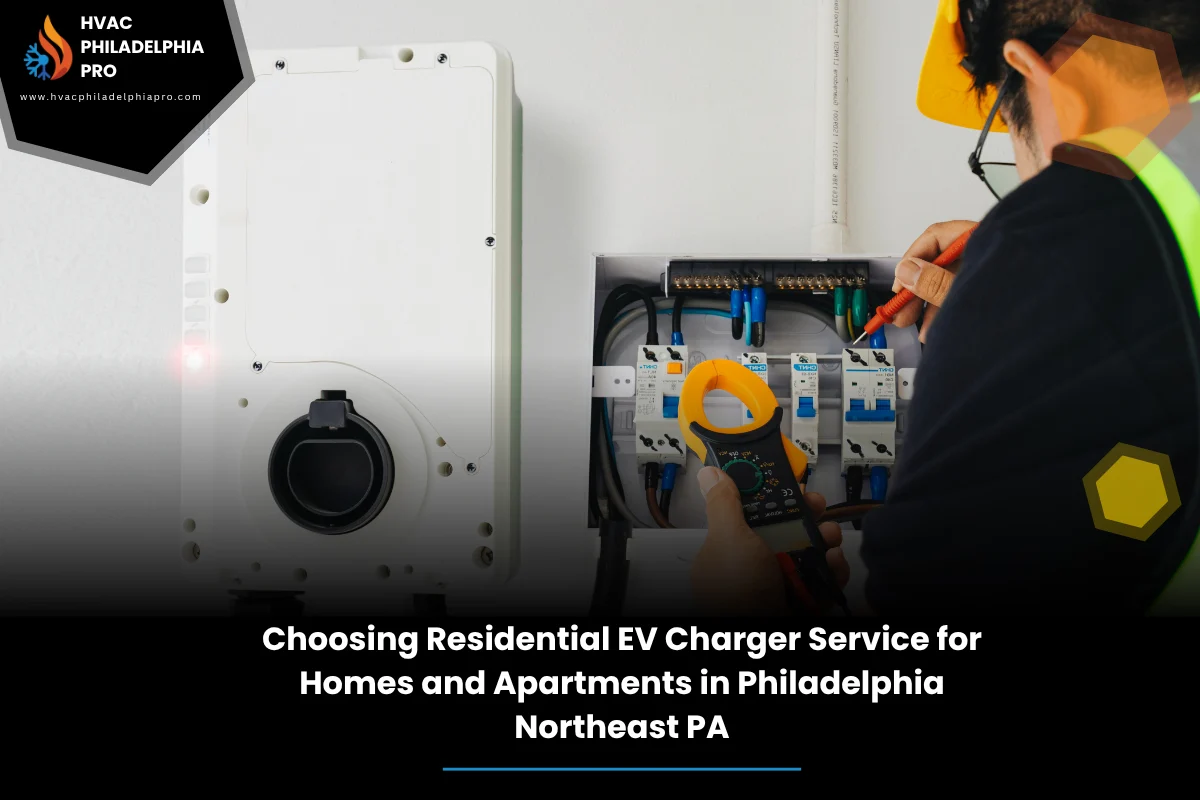
Picking the right help for your home charging is not just about speed. It is about safety, wiring, and steady uptime. If you are comparing options for residential EV charger service in Philadelphia, start with how your home or building is set up and what daily charging you need. With HVAC Philadelphia Pro, you get clear talk, careful checks, and work that fits real homes and lived-in spaces.
If you want details on scheduling and upkeep, visit residential EV charger service in Philadelphia to understand what a maintenance visit can cover and how it aligns with your charger and panel.
Table of Contents
Quick Summary
Here is a fast way to think about charger care in Northeast Philly homes and multifamily buildings. First, match the charger type to your daily miles. Then confirm panel capacity, a safe circuit, and clean cable routing. Set a simple maintenance plan that checks connectors, ground fault tests, and software updates. In apartments and condos, add access rules, parking assignments, and notice windows for any work. For deeper how-tos, see the Complete Guide to EV Charger Maintenance in Philadelphia PA for Reliable Home Charging and keep this page handy for decisions specific to homes and apartments.
What Residential EV Charger Service Covers
A good service visit looks past the charger faceplate. Techs review the breaker size, wire gauge, and terminations, then run tests on the GFCI and the charging port. They also inspect the cable for wear and check the mount so vibration and tugging do not loosen anything.
Most visits include firmware checks, error code pulls, and a simple load check at the panel. That kind of preventive maintenance stops small faults from turning into shutdowns. If your setup includes a networked app, they verify the app reads match the charger output.
In a townhome or condo, they may also verify the shared meter setup and labeling so future work is clear. Keeping that map tidy saves time and avoids tripped breakers during peak hours.
Home vs Apartment Needs in Northeast Philadelphia
Detached homes in Philadelphia Northeast PA often have more panel options and shorter wire runs. Apartments, condominiums, and townhomes deal with shared garages, longer conduit paths, and approval steps. That is fine. It just changes the plan, not the outcome.
In shared spaces, plan for clear labels, posted schedules, and simple rules for cable use. Strong load management is key when several chargers share the same feeder. In single-family homes, the focus shifts to weather exposure, cable storage, and surge protection at the panel.
When you think about EV charger maintenance in Philadelphia PA, ask for notes that fit your exact building type. The right checklist looks different in a driveway than in a stacked parking deck.
Safety and Code Basics You Should Know
Safety starts with a dedicated circuit, correct breaker size, and tight terminations. Every charger should pass ground fault tests, and outdoor units need correct covers and drip loops. Proper GFCI protection and bonding make all the difference if a cord gets wet or damaged.
According to U.S. Department of Energy (2023), Level 1 and Level 2 charging each have distinct electrical needs, and correct installation plus routine checks improve long-term reliability. U.S. Department of Energy: Charging at Home
Ask for written results of insulation resistance tests and torque checks on lugs. That paperwork helps track trends over time and keeps the next visit fast and focused.
Level 1 vs Level 2 Maintenance: A Quick Comparison
Level 1 is slow but simple. Level 2 is faster and needs more careful checks. Both should be safe, labeled, and verified yearly. In homes and small multifamily spaces, clean cable storage and weather protection prevent early wear.
| Item | Level 1 | Level 2 |
|---|---|---|
| Typical Circuit | 120V outlet, dedicated preferred | 240V dedicated circuit, sized to spec |
| Key Checks | Outlet heat, cord wear, GFCI test | Breaker size, wire gauge, GFCI, firmware |
| Common Issues | Loose outlet, hot plug, tripped GFCI | Undersized breaker, poor lugs, software faults |
| Maintenance Focus | Outlet condition and safe routing | Level 2 load checks and thermal scan |
| Best For | Light daily miles or overnight top-ups | Regular commuting and faster recovery |
Simple Framework: Assess, Install, Maintain
Use a three-part plan that works for homes and multifamily alike. Assess the panel and parking spot. Install to spec with permits and labels. Maintain on a steady maintenance schedule so small issues do not snowball. For even more detail on task lists and intervals, refer to the complete guide on this topic and tailor it to your building type.
Assess: confirm load capacity and cable reach. Install: size the breaker, route conduit safely, test GFCI. Maintain: clean connectors, update software, and test charge rates seasonally.
This same plan fits a driveway in Bustleton and a shared garage near Rhawnhurst. The steps do not change, only the paperwork and access details.
Signs Your Charger Needs Attention
Watch for slower charge times without a change in weather or driving. Feel the plug and breaker area after a short session; heat hints at trouble. Buzzing from the panel, repeated trips, or new error codes are all reasons to pause and check.
Do not ignore flaky Wi-Fi, random restarts, or charge pauses. Quick diagnostics catch loose lugs, failing outlets, or firmware bugs before they lead to full shutdowns. In short, small signs matter most.
If you share parking, log issues with time and spot number. That record speeds the next visit and avoids guessing.
Picking the Right Partner Without Guesswork
When you search for the best EV charger maintenance company in Philadelphia, look past ads. Ask for proof of similar work in homes, apartments, condominiums, and townhomes. Make sure they explain breaker sizing, labeling, and safe cable routing in plain words you can verify.
Good partners offer clear scopes, photo reports, and simple pricing tiers for routine visits. Ask how they handle parts, returns, and warranty support so you are not stuck during a claim. Finally, confirm response times for urgent faults.
Your checklist should also include references and a sample report. Reports show how they think, not just how they talk.
Scheduling and Access Tips for Multifamily Buildings
Post a short notice for nearby residents before any work. Add parking spot numbers, times, and a contact name. Clear access windows cut delays and reduce noise complaints.
Keep a binder or shared folder with permits, charger model numbers, and panel maps. That packet helps the next tech find the right gear fast. For EV charger maintenance in Philadelphia PA, small admin steps like these pay off big later.
Where spaces are tight, use cable guards and simple hooks. Keeping cables off the floor reduces trips and keeps connectors clean.
FAQs
- How often should I service my home charger?
Most homes do well with a yearly check. If you use Level 2 daily or share circuits, consider a mid-year quick check for heat, torque, and error logs.
- Do apartments and condos need special steps?
Yes. Plan access, labels, and notices. Shared garages often need permits, clear routing, and posted schedules to avoid conflicts.
- Can I plug a Level 2 charger into any 240V outlet?
Not safely. Level 2 needs a dedicated circuit sized to the charger and verified for wire gauge, breaker rating, and grounding.
- What maintenance can I do myself?
Keep the connector clean and dry, coil the cable gently, and watch for heat or wear. Leave panel, breaker, and internal tests to a qualified pro.
- Why does my charger slow down in winter?
Batteries limit intake in cold weather and chargers may adjust current. Still, if slowdown is extreme or new, schedule a check for voltage drop or faults.
- Is a smart charger worth it for apartments?
Often, yes. Usage data helps plan access and costs. Just be sure Wi-Fi or cellular signal is reliable in the garage.
- Do I need a permit for upgrades?
Usually. New circuits, panel work, and conduit runs commonly require permits. Your building or city office can confirm exact steps.
- How do I prepare for a service visit?
Clear the area, note recent errors, and have the charger model and panel location ready. In shared garages, reserve the spot and post a short notice.
Conclusion
Choosing a path for residential EV charger service in Philadelphia does not have to feel hard. Start with a simple plan: assess, install, maintain. Match your setup to your charging needs, keep records, and act early on small signs like heat or slow sessions.
In Philadelphia Northeast PA homes and multifamily buildings, a steady plan prevents downtime and keeps costs predictable. If you need clear guidance or a practical checklist for your home, apartment, condominium, or townhome, reach out. Contact HVAC Philadelphia Pro for expert assistance. Tie your routine to the bigger picture of strong EV charger maintenance in Philadelphia PA, and your charger will be ready when you are.
continue reading
Related Posts
Learn how to choose EV charger repair near me with clear safety checks, a simple shortlist framework, and provider comparisons so you can fix issues fast and right.
Power failures can freeze business chargers. Learn fast triage, common faults, and safe fixes for Marlton NJ sites, plus when to use emergency EV charger repair in Philadelphia.
Practical guidance for Springfield PA businesses on EV charging station repair in Philadelphia, with fast triage steps, safety basics, network vs standalone tips, and industry-specific advice.