
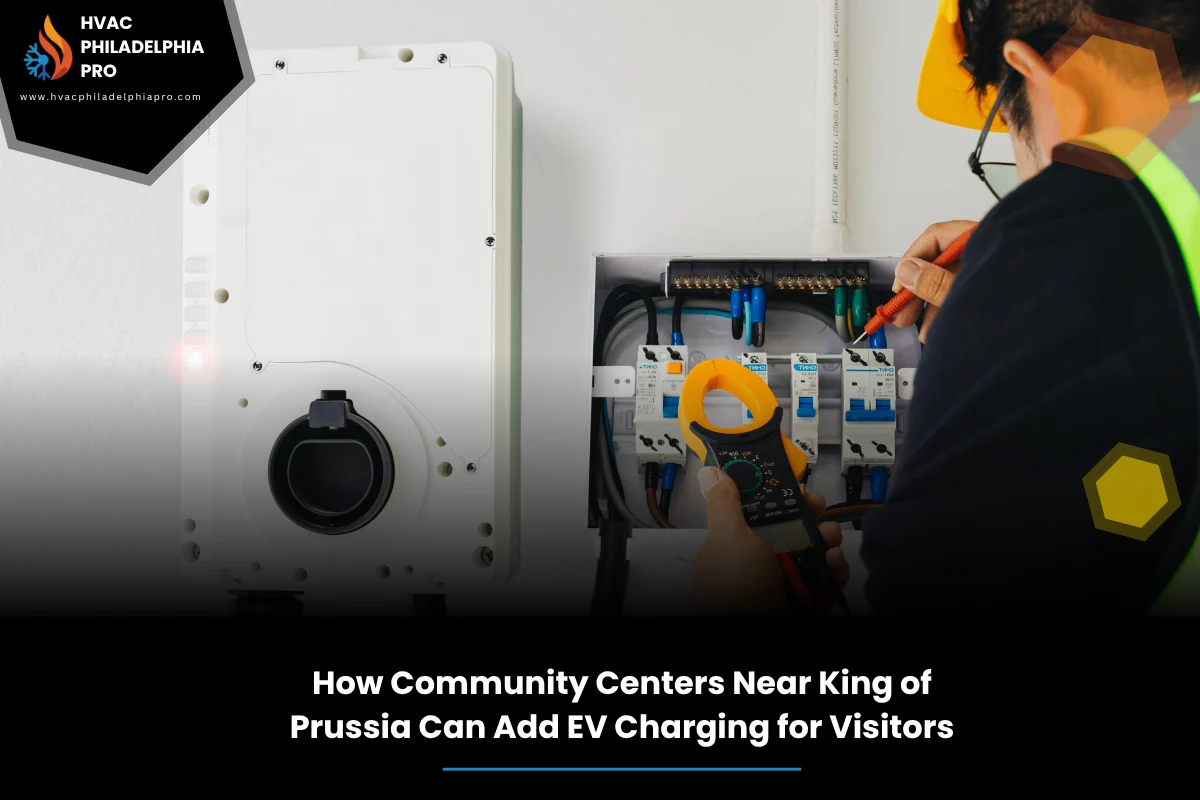
Community centers bring people together for classes, games, events, and support. Now more visitors arrive in electric cars, and some need a charge while they’re inside. Adding chargers sounds complex, but with a clear plan, it’s very doable. The first step is understanding what visitors actually need and what your building can support.
HVAC Philadelphia Pro helps property teams plan projects like this without drama. If you are searching for EV charging station installation near me, you likely want simple guidance, straight answers, and a path that fits your budget and schedule. If you want local help and a starting point you can trust, see EV charging station installation near me.
Table of Contents
Quick Summary
Most community centers do well with Level 2 chargers. They work on 240 volts, add solid range per hour, and fit typical visit times. Start with two to four ports in visible, safe spots. Use networked units if you plan to manage access, set simple fees, or track use over time.
Check panel capacity, trenching needs, and ADA access early. A basic pilot can go live fast if the run is short and your panel has room. For broader planning, permits, and wiring basics, see the Complete Guide to EV Charger Installation in Philadelphia PA for Homes and Small Facilities.
Why EV Charging Fits Community Centers
Visitors usually stay 1 to 3 hours. That’s perfect for Level 2 charging, which adds meaningful range during a class or game. It also supports staff who drive electric. With a small pilot, you can learn patterns and expand later without overbuilding on day one.
Charging also makes your lot more welcoming and future-ready. Position a small bank near the entrance or a well-lit area so drivers see it and feel safe using it at night. Treat the stations as a public charging amenity, with clear rules and easy payment if needed.
Choosing Charging Levels and Hardware
Your main choice is Level 1, Level 2, or DC fast. For most community centers, Level 2 charging is the sweet spot. It balances speed, cost, and power needs. Decide if you want networked features like access control, usage data, or simple billing before you buy.
According to the U.S. Department of Energy (2024), charging speed and electrical needs vary by level, so sites should match charger type to dwell time and electrical capacity. U.S. Department of Energy: Electric Vehicle Charging Station Basics
| Type | Typical Use | Speed | Best For | Notes |
|---|---|---|---|---|
| Level 1 | 120 V outlet | Very slow | Staff parking all day | Low cost, minimal install |
| Level 2 | 240 V circuit | Moderate | Visitor stays of 1 to 3 hours | Most common for shared sites |
| DC fast | High voltage | Very fast | High-turnover hubs | High cost, heavy power needs |
Pick rugged enclosures, long cables, and mounts that fit your lot. If you want to manage users or set time limits, choose units that support OCPP networks and simple admin portals. Keep it simple for drivers: one tap, one code, or one card.
Power, Panel Capacity, and Load Management
Your panel must handle added load. A site walk should confirm breaker space, feeder size, and distance to parking. Long runs add cost. Short runs with existing conduit are faster and cheaper.
When power is tight, use load management. It lets you share one circuit across ports or cap total draw so you don’t trip breakers. Right-sizing amperage, using shared circuits, or phasing units over time keeps the project practical and avoids avoidable upgrades.
If you think future growth is likely, stub in conduit now. It’s far cheaper to plan extra pathways before asphalt work is done than to dig again later. Label everything clearly so the next add-on is simple.
Smart Features, Access, and Billing
Networked stations support role-based access, payment, and data. For a community center, basic role groups like staff, members, and guests work well. You can set time windows, max session length, and simple kWh or session fees.
Start with must-haves. If you don’t need fees on day one, keep it open and watch usage first. When you are ready, turn on smart charging features like scheduled power caps during peak hours or auto-idle fees to keep cars moving.
Plan for clear fallbacks. Post a phone number for help and a short set of rules on the sign. Keep cables off the ground and use retractors if your lot gets busy.
Site Planning, Signage, and Accessibility
Pick visible, safe stalls close to power. Good lighting, cameras if you have them, and accessible paths help everyone use the stations confidently. Design with snow, leaves, and daily traffic in mind so the area stays clean and clear all year.
Post simple wayfinding signs and rules: who can use it, time limits, fees if any, and contacts for help. Confirm ADA accessibility with a clear access aisle, reachable cable, and a curb-free route from stall to sidewalk.
Local Checklist for King of Prussia PA Community Centers
Local approvals matter. For sites near King of Prussia PA, confirm township permitting steps, utility mark-outs, and inspection timelines. Ask your utility about make-ready programs or rebates. Plan trenching away from tree roots and known underground lines, and verify snow plow routes.
If you are comparing options you see for commercial EV charger installation in Philadelphia, look for plans that include conduit layout, load calculations, and a clean traffic flow. Teams who handle Level 2 EV charger installation in Philadelphia often know the regional utility and inspection rhythm, which helps your schedule.
When in doubt, bring in an EV charger electrician in Philadelphia for a quick panel check and site walk. Keep notes on panel space, breaker sizes, and the shortest safe route to parking. Photos and a simple sketch help speed up the permit package.
Step-by-Step Rollout Framework for Community Centers
- Step 1: Survey needs. Count daily visitors, staff EVs, and peak times.
- Step 2: Check power. Confirm spare capacity and best panel location.
- Step 3: Choose hardware. Start with two Level 2 ports.
- Step 4: Plan layout, accessibility, and trenching.
- Step 5: Permit and schedule. Step 6: Install, test, and train staff.
Keep it as a phased rollout. Launch two ports, measure use for 60 to 90 days, then decide if you need more. If you want a deeper walk-through of permits, wiring basics, and safety, see the complete guide on this topic.
Document everything: panel photos, breaker labels, conduit routes, and network login details. A one-page quick-start for staff prevents most headaches on day one.
Maintenance, Uptime, and Reporting
Plan light care from the start: monthly visual checks, cable inspections, and cleaning. Keep a spare holster or cable if your model allows it. Review energy use and sessions each month to see patterns and spot issues early.
Schedule preventive maintenance twice a year. Test RFID cards or app access, check signage, repaint stall markings if faded, and confirm software is current. Clear ice or snow piles so cables do not drag or freeze in place.
Share simple reports with your board or director: sessions per week, top hours, and revenue if you charge fees. These numbers guide when to add ports or tweak rules.
FAQs
- How many chargers should a community center start with?
Start small. Two Level 2 ports cover most centers and give you data on use. Expand after 60 to 90 days if stalls stay busy or wait times grow.
- Do we need networked chargers?
If you plan to manage access, set fees, or track usage, yes. If you want open and simple at first, non-networked units can work. You can upgrade later.
- Where should we place the chargers?
Close to power, in a visible, well-lit spot with clear paths. Make sure one space can meet accessibility needs and that cables reach without strain.
- What electrical checks are required?
Confirm panel capacity, breaker space, wire runs, grounding, and GFCI needs. A site walk and load calc make sure the plan is safe and code-compliant.
- How do we prevent cars from sitting all day?
Use time limits on signs, gentle idle fees on networked units, and staff reminders. Clear rules keep stalls turning without conflict.
- Can we recover costs without scaring people off?
Yes. Use modest session or kWh fees and free grace time at start. Review monthly and adjust slowly based on actual use and feedback.
Conclusion
Adding chargers at a community center is a practical upgrade, not a leap. With a short plan, a smart layout, and Level 2 units, you can serve visitors well and learn as you go. If you typed in EV charging station installation near me looking for a path forward, you now have one.
Start with a pilot, keep the rules simple, and track use for a couple of months. Expand only when the data supports it. For help turning a sketch into a safe, code-ready plan, contact HVAC Philadelphia Pro for expert assistance. The complete guide to EV charger installation for homes and small facilities can also reinforce your planning basics and next steps.
continue reading
Related Posts
Learn how to choose EV charger repair near me with clear safety checks, a simple shortlist framework, and provider comparisons so you can fix issues fast and right.
Power failures can freeze business chargers. Learn fast triage, common faults, and safe fixes for Marlton NJ sites, plus when to use emergency EV charger repair in Philadelphia.
Practical guidance for Springfield PA businesses on EV charging station repair in Philadelphia, with fast triage steps, safety basics, network vs standalone tips, and industry-specific advice.