
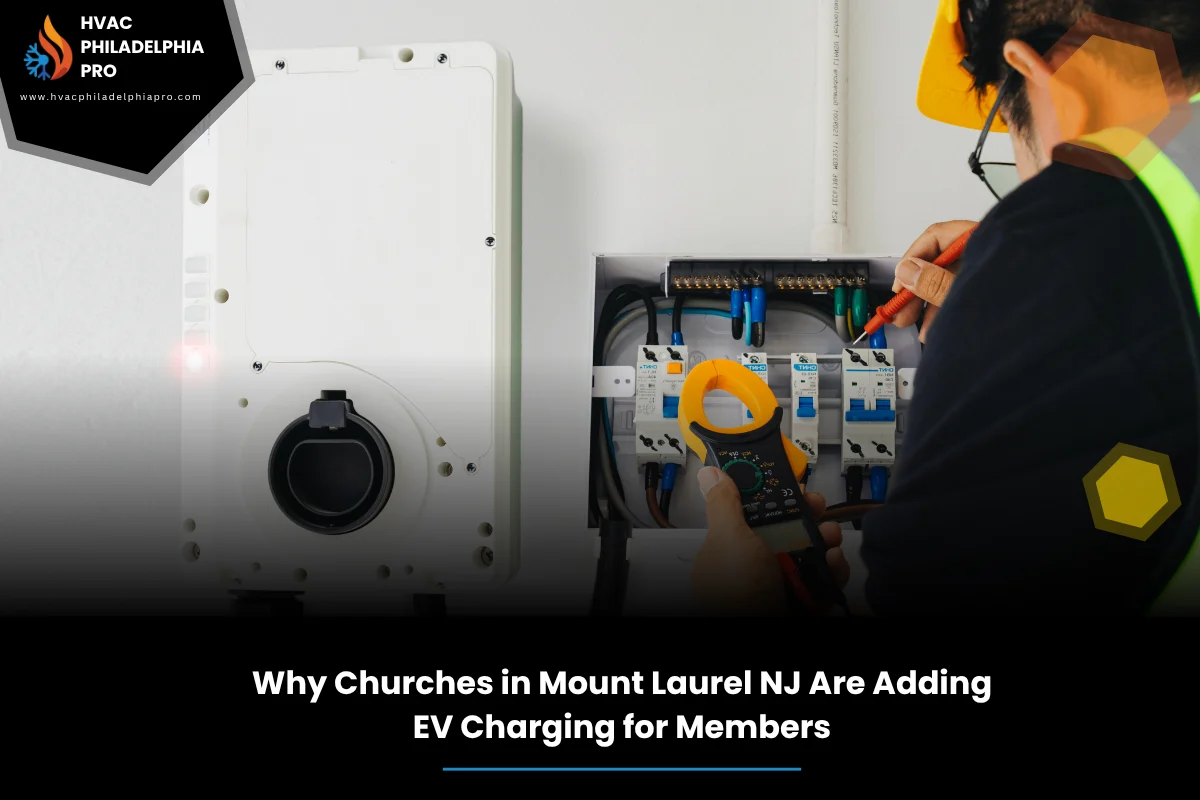
More church families in Mount Laurel NJ drive electric now. On Sundays, weeknights, and outreach days, they park for an hour or two and would love to top up while they gather. Adding chargers shows care for people and creation, and it helps guests feel welcome. If you have been searching for EV charging station installation near me, you are not alone. Many church boards are asking the same thing.
The first step is a safe plan, a quick site assessment, and a clear policy for access. That work feels big, but it is manageable. If you need practical next steps or local options, learn more here: EV charging station installation near me.
As you consider the path, remember that HVAC Philadelphia Pro helps homes and small facilities every day with electrical, generators, and more. Their steady process of inspecting first, explaining clearly, and doing the job right applies well to church charging too.
Table of Contents
Quick Summary
Churches add chargers to serve members, welcome guests, and support stewardship. Most sites start with two Level 2 chargers near the main entrance or fellowship hall. A simple load check, clear signage, and fair-use rules keep everything smooth. Start small, monitor usage, and expand if demand grows.
Expect a short planning phase to review power capacity, parking flow, and accessibility. Then choose hardware with network features you will actually use. Write a short policy for hours, fees, and volunteers. Finally, train staff on breaker resets and safety basics. With that framework, charging becomes one more helpful ministry on your campus.
Why Churches Are Adding EV Charging
EV drivers plan their trips around good places to park. Churches already offer safe lots, trusted people, and meaningful time on site. Charging fits Sunday rhythms, midweek ministries, and special events. It also signals care for neighbors and creation, which many members value as part of faithful community outreach.
For a deeper grounding in steps like permitting and safety checks, see the Complete Guide to EV Charger Installation in Philadelphia PA for Homes and Small Facilities. It explains planning, hardware, and wiring basics that apply to small facilities like church campuses.
As you weigh options for Mount Laurel NJ, think about Sundays first. People park for 60 to 120 minutes. That window matches Level 2 charging well. Midweek events, choir practice, and youth nights add more chances to charge without rush.
Parking Layout and Signage That Work on Sundays
Pick stalls that are close enough to be safe but not so prime that they cause friction. Two spaces near a side entrance or fellowship hall often work well. Good signs prevent awkward moments at arrival time.
Keep the path to the chargers clear and visible. Mark the pavement and post easy-to-read rules at eye level. Plan at least one stall with accessible parking dimensions for better reach and safe mobility.
If your lot gets tight, consider time limits during peak hours. A simple swap policy after service helps more people benefit without stress.
Choosing Charger Types For Congregations
Church lots rarely need DC fast units. Most members park long enough for Level 2 charging, which balances cost, speed, and power draw. Level 1 can serve staff cars parked all day, but it is too slow for Sunday visits.
| Type | Best Use | Pros | Limits |
|---|---|---|---|
| Level 1 (120V) | Staff all-day parking | Low cost, simple | Very slow for visitors |
| Level 2 (240V) | Sunday and midweek visits | Good speed, scalable | Needs 240V circuits |
| DC Fast | High-traffic sites | Very fast | Expensive, high power |
According to the U.S. Department of Energy Alternative Fuels Data Center (2023), Level 1 uses a standard 120V outlet while Level 2 requires a 240V supply and provides much faster charging, with DC fast using even higher power for rapid sessions (AFDC, 2023). U.S. DOE AFDC: Electric Vehicle Charging Infrastructure
For Mount Laurel NJ churches, two Level 2 ports often meet current need. You can add more later as EV adoption grows in your congregation.
Power, Panels, and Safety Basics
Start with a breaker panel check. Many churches can add a 40 to 60 amp circuit for a two-port unit, but you must confirm spare capacity. If the panel is tight, options like load management can safely balance power across chargers.
Keep wiring short and protect conduits from snow and plows. Use outdoor-rated components and proper GFCI protection where required. Label breakers so staff can respond quickly if a trip occurs during service.
Document everything. Keep manuals, warranties, and as-built photos in a binder. Future volunteers will thank you when it is time to add a second unit or move a pedestal.
Smart Policies, Access, and Data
Networks help set hours, rates, and alerts. That supports fair use without daily oversight. If you choose connected hardware, keep the settings simple.
Decide if you will open chargers to the public on weekdays or keep them member-first on Sundays. Clear rules posted on the pedestal avoid confusion. For sites that want usage insights or limited public access, a smart EV charger installation can manage authentication and simple reporting.
Use data to guide choices. If Sunday mornings spike, consider another pair of ports. If usage stays low, promote the service in the bulletin and on your website.
A Simple Framework To Plan EV Charging For Your Church
Use this step-by-step path to lower risk and stay organized. It works well for church boards and trustees.
- Do a quick site walk: note panel size, parking flow, and lighting.
- Set a goal: member-first, guest-welcome, or public during office hours.
- Pick charger type: usually Level 2 with two ports to start.
- Choose placement: safe, visible, and not your very best stalls.
- Confirm power: review panel capacity and needed circuits.
- Plan signage and policy: hours, time limits, and any fee.
- Install, test, and launch a short pilot phase of 60 to 90 days.
For deeper planning checklists and permitting notes, see the complete guide on this topic. It expands each step and helps you avoid common pitfalls.
After the pilot, review usage, feedback, and costs. Adjust settings, update signs, and decide when to expand.
Lessons From Nearby Installs That Apply In Mount Laurel
Regional projects show a few patterns that church teams can copy. First, scope the trenching and concrete work early. Second, assign one point person for contractor coordination and church communications. Third, confirm winter plow paths before you draw conduit routes.
When studying examples of commercial EV charger installation in Philadelphia, note how teams staged work to avoid weekend events. Many also picked dual-port pedestals to save space and cost. Those ideas transfer well to church lots in Mount Laurel NJ.
For boards comparing Level 2 EV charger installation in Philadelphia to suburban sites, the main difference is parking turnover. Churches see longer dwell times, which fits L2. If you ever need help with permits or a licensed EV charger electrician in Philadelphia for cross-border properties or case studies, learn from their process and adapt it locally.
Funding, Fees, and Community Support
Some churches make charging free for members and set a small fee for guests. Others set a low kWh or hourly rate to cover electricity. Keep it simple and transparent. Encourage small gifts for sustainability ministries if you keep charging free.
Ask local businesses or families to sponsor a port. Modest donor recognition on the sign can help. Grants may exist, but they often take time and paperwork. Start with what you can control now.
Share usage updates in the bulletin. Celebrate small wins, like miles powered by your church each month. That builds support for future ports.
Maintenance, Training, and Long-Term Stewardship
Assign a point person and a backup. Train them on breaker locations, app settings, and basic resets. Keep a laminated quick-start sheet in the office for Sundays.
Plan preventive maintenance: monthly visual checks, quarterly cleaning, and yearly hardware reviews. Replace cracked labels and faded signs. Keep cables coiled off the ground to avoid snow and salt damage in winter.
Track uptime and issues in a simple log. When you see repeat hiccups, call your electrician before a small problem becomes a Sunday headache.
FAQs For Church Boards
- How many chargers should a medium church start with?
Most start with a two-port Level 2 unit. That covers Sunday mornings and midweek events, and you can add a second pedestal later if demand rises.
- Do we need new electrical service for two Level 2 ports?
Often no. Many panels can support one 40 to 60 amp circuit. A load check by a licensed electrician will confirm capacity and options.
- Should we charge a fee or keep it free?
Either works. Free charging is simple and welcoming. A small fee can offset electricity and help manage dwell time. Post clear rules and stick with them.
- Where should we place the chargers?
Close to entrances but not in prime front-row stalls. Ensure safe lighting, visible signs, and at least one accessible stall layout where possible.
- What permits or inspections are required?
Most municipalities require an electrical permit and inspection. Your electrician will handle paperwork and schedule the final inspection.
- What if a breaker trips during service?
Have a simple response plan. Label the breaker, train one staff member on resets, and post a step-by-step sheet in the office.
Conclusion
Adding charging at your church does not have to be hard. With clear goals, a small pilot, and steady upkeep, you can turn parking time into helpful miles for members and guests. If you have been searching for EV solutions like EV charging station installation near me, start with a simple plan, then grow as usage increases.
Keep it friendly, fair, and safe. Choose Level 2 for most church visits, place stalls where signs are easy to see, and train a point person. When you want guidance on electrical capacity or network features, reach out to a trusted local pro. Contact HVAC Philadelphia Pro for expert assistance. With a sound plan, your Mount Laurel NJ church can make EV charging a quiet, steady support for your whole community.
continue reading
Related Posts
Learn how to choose EV charger repair near me with clear safety checks, a simple shortlist framework, and provider comparisons so you can fix issues fast and right.
Power failures can freeze business chargers. Learn fast triage, common faults, and safe fixes for Marlton NJ sites, plus when to use emergency EV charger repair in Philadelphia.
Practical guidance for Springfield PA businesses on EV charging station repair in Philadelphia, with fast triage steps, safety basics, network vs standalone tips, and industry-specific advice.