
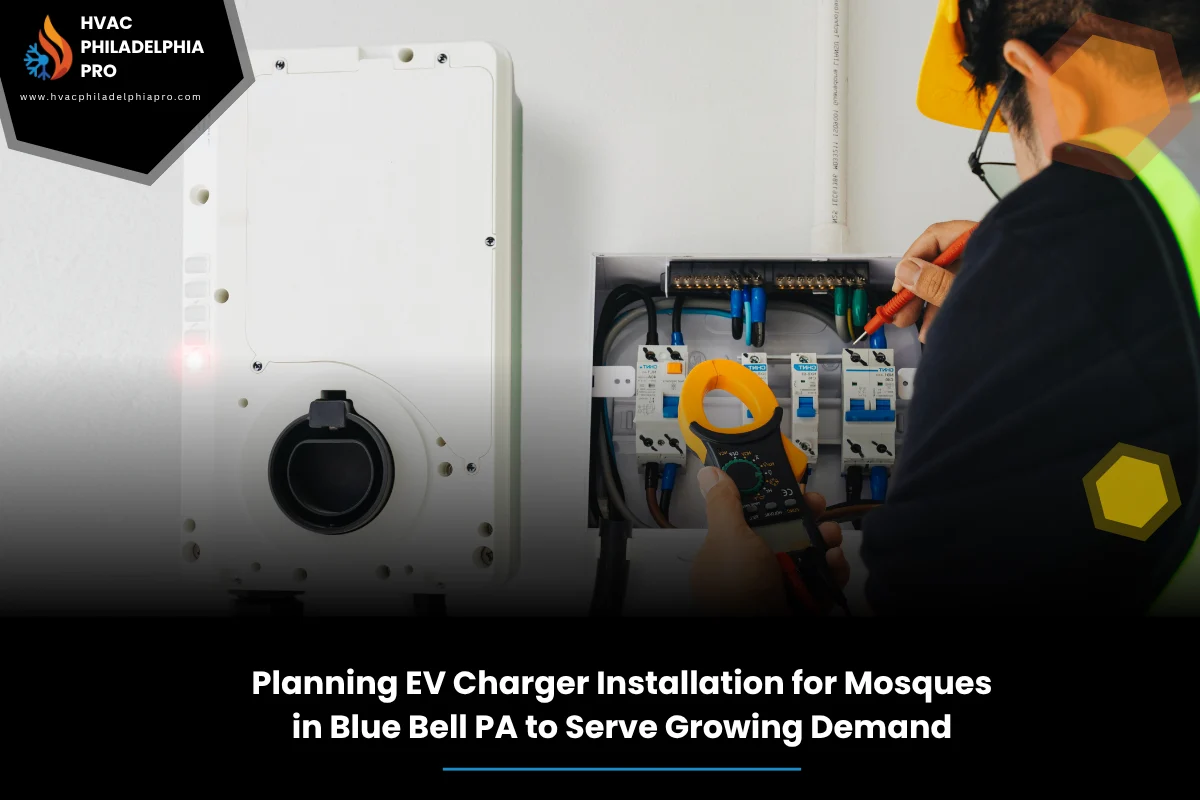
Blue Bell PA sees more electric vehicles each month, and mosque leaders feel it during Jumuah and evening programs. Families stay longer, and many ask where they can plug in. That is why planning now for EV charging station installation near me keeps traffic calm, parking orderly, and visitors cared for without stress.
If your team needs a clear overview of specs and timelines, start with an educational chat about EV charging station installation near me so you can map needs to a simple plan before you purchase hardware.
HVAC Philadelphia Pro helps property owners understand electrical loads, panel limits, and safe layouts. This article focuses on practical planning for mosques in Blue Bell PA. It builds on the broader basics covered in the pillar topic about complete EV charger installs for homes and small facilities, and applies them to multi-use worship spaces.
Table of Contents
Quick Summary
Here is the short version. Start with attendance data tied to prayer times to right-size the number of ports. Prioritize Level 2 chargers in the main lot, and keep the layout simple, visible, and safe. Plan power capacity early, and use smart load management to avoid panel upgrades where possible. Build a policy for access, time limits, and donations.
For deeper background on power, permitting, and typical hardware, see the Complete Guide to EV Charger Installation in Philadelphia PA for Homes and Small Facilities, then tailor those basics to prayer schedules, community events, and parking flow unique to mosques.
Why Mosques in Blue Bell PA Should Plan Now
Blue Bell sits near busy commuting routes, and weekend events can fill lots fast. Planning before peak demand avoids rushed decisions and short-term fixes. A simple forecast based on Jumuah counts and evening classes gives you a clear target. Treat this as a phased project, not a one-time task.
Start with a basic demand assessment: how many EVs now, and how fast that number might grow in 12 to 24 months. For many mosques, two to four Level 2 ports cover the near term. You can add more later as adoption rises. Good planning saves money and prevents layout changes down the road.
Charger Levels and Mosque Parking Patterns
Prayer times run short, but many worshippers stay longer for classes, visits, or meetings. This mixed dwell time fits Level 2 best because it adds useful range during a one to two-hour visit. DC fast can help during special events, but it is costly and often not needed for daily use.
According to the U.S. Department of Energy (2024), Level 1 uses a 120V circuit, Level 2 uses 240V and suits daily destination charging, and DC fast delivers high power suitable for corridor or quick-turn sites. U.S. Department of Energy: Alternative Fuels Data Center
| Type | Best Use at Mosques | Speed | Pros | Cons |
|---|---|---|---|---|
| Level 1 | Overnight or staff parking | Slow | Low cost; simple | Too slow for most visitors |
| Level 2 | Main lot for visitors | Moderate | Good range added during programs | Needs 240V circuits |
| DC Fast | Special events or travel hubs | Very fast | Quick turn during peak times | High cost; heavy power needs |
If you must choose, pick Level 2 charging for the first phase. It balances cost, speed, and flexibility for worship schedules and community programs.
Power Capacity, Panels, and Load Management
The smartest plan checks service size, spare breaker space, and feeder routes before buying hardware. Many sites make Level 2 work without a service upgrade by staggering loads. Look for chargers that share power and adjust output as more cars plug in.
Ask your electrician to model worst-case draw during Jumuah. With load management, two to six ports can run on one feeder. Set the max amps per port and cap the group total. This keeps lights, HVAC, and kitchen equipment happy while cars charge steadily.
Site Layout, Parking Flow, and Accessibility
Place chargers near existing power paths and high-visibility spots, but not where they block main traffic. Aim for pull-through ease and clear backing zones. Keep cables off walkways and away from tight turns. Good lighting and cameras help with safety and wayfinding.
Design at least one space with ADA-compliant access where required, including clear routes and proper reach to the connector. Add wheel stops and clear striping so drivers park within cable reach. Simple signs with time limits reduce vehicle stacking during peak times.
Safety, Permitting, and Utility Coordination
Electrical safety comes first. Use UL-listed equipment and proper grounding. Protect equipment with bollards or curbs, and keep working space clear. Weather-rated enclosures matter in winter months.
Before you start, check township rules and file the right paperwork. Expect a permit and inspection for new circuits and trenching. If your load is close to the service limit, your utility may need to confirm transformer capacity. Early calls prevent surprise delays.
Smart EV Charger Features that Help Congregations
Software can make charging fair and easy. App-based access, time-of-use rules, and RFID cards keep sessions moving. Remote resets save late-night callouts, and simple dashboards show usage over time.
Choose hardware that supports smart charging with dynamic load sharing and scheduling. You can set lower amps during peak building use and boost it during off-hours. If you plan donations or fee recovery, pick a platform that handles simple payments without extra hardware.
Step-by-Step Planning Framework for Mosque Projects
Follow this simple framework to stay on track. It keeps teams aligned and avoids change orders.
- Scope definition: Count current EVs, forecast 12 to 24 months, pick target ports for phase one.
- Power check: Review panel capacity, feeder options, and the best path to parking.
- Charger selection: Prioritize Level 2 with shared-load features and clear cable management.
- Layout and access: Mark spaces, ADA routes, bollards, and signage copy before you buy hardware.
- Permits and utility: Submit drawings early; confirm meter and transformer impacts.
- Pilot phase: Start small to validate parking flow and software settings. This phased rollout reduces risk.
- Go-live and train: Teach staff how to reset chargers, read dashboards, and manage time limits.
For fuller background on equipment types and home-scale wiring that also informs small facilities, review the complete guide on this topic before you finalize specs and labels.
Blue Bell and Philadelphia Regional Context
Blue Bell mosques sit within the greater metro, so learning from nearby installs helps. Many teams reference regional coordination on codes, snow clearance, and signage language. When researching case studies and vendor options around the city, you will often see terms like commercial EV charger installation in Philadelphia and Level 2 EV charger installation in Philadelphia used for similar property types.
When electrical help is needed outside Blue Bell, some communities look for an EV charger electrician in Philadelphia who understands mixed-use lots and event traffic. Keep location notes clear in your plan so crews know access times, campus rules, and holiday schedules.
Policies, Signage, and Community Engagement
Simple rules prevent friction. Post time limits during peak periods, and write clear steps on how to start a session. Add a support phone number or an email in case someone gets stuck at night. Use easy symbols so guests who speak different languages can follow along.
Set a modest idle fee or a grace period if chargers stay blocked after charging stops. Build a short guide for new volunteers and staff. Routine checks and a preventive maintenance plan keep cables tidy, pedestals straight, and ports clean.
FAQs
- How many chargers should a mosque in Blue Bell start with?
Most sites begin with two to four Level 2 ports and add more as adoption grows. Count Friday use, evening classes, and weekend events to match demand. Plan conduit for expansion so adding ports later is simple.
- Do we need a service upgrade to add Level 2 chargers?
Not always. Load management lets multiple ports share a circuit group without tripping limits. An electrician should check panel space, feeder size, and total building load to confirm.
- Where should we place chargers in the lot?
Pick visible spots near existing power paths that do not block traffic. Keep cable runs short, add bollards for protection, and include at least one accessible space where required.
- What software features matter most?
Look for access control, simple payments if needed, dynamic load sharing, remote resets, and clear usage reports. Scheduling and time limits help during Jumuah and big events.
- Can we mix Level 1 and Level 2?
Yes. Level 1 can serve staff or overnight visitors, while Level 2 covers daily worshippers. Plan signage and cable reach so drivers know which spaces to use and when.
- How do we prevent cables from becoming trip hazards?
Use pedestal designs with holsters, place chargers at the head of spaces, and add wheel stops. Avoid long cross-walk cable runs. Good lighting helps drivers see equipment at night.
- How should we handle donations or fees?
Some sites keep charging free and invite donations. Others set a small per-kWh or per-hour rate. Pick a platform that keeps billing simple and transparent to reduce admin work.
Conclusion
A thoughtful plan for EV charging at mosques keeps visitors moving, reduces parking stress, and supports a growing number of drivers. Start with clear goals, choose Level 2 for daily use, and use smart load sharing to stretch your power. Keep the team aligned with simple rules, training, and steady upkeep.
Focus each step on safety, access, and clear signs. If you need help mapping power, layout, and software, reach out early so you avoid costly do-overs. Contact HVAC Philadelphia Pro for expert assistance. With a practical roadmap, your campus will be ready when people search for EV charging station installation near me and arrive expecting a smooth, safe place to plug in.
continue reading
Related Posts
Learn how to choose EV charger repair near me with clear safety checks, a simple shortlist framework, and provider comparisons so you can fix issues fast and right.
Power failures can freeze business chargers. Learn fast triage, common faults, and safe fixes for Marlton NJ sites, plus when to use emergency EV charger repair in Philadelphia.
Practical guidance for Springfield PA businesses on EV charging station repair in Philadelphia, with fast triage steps, safety basics, network vs standalone tips, and industry-specific advice.