
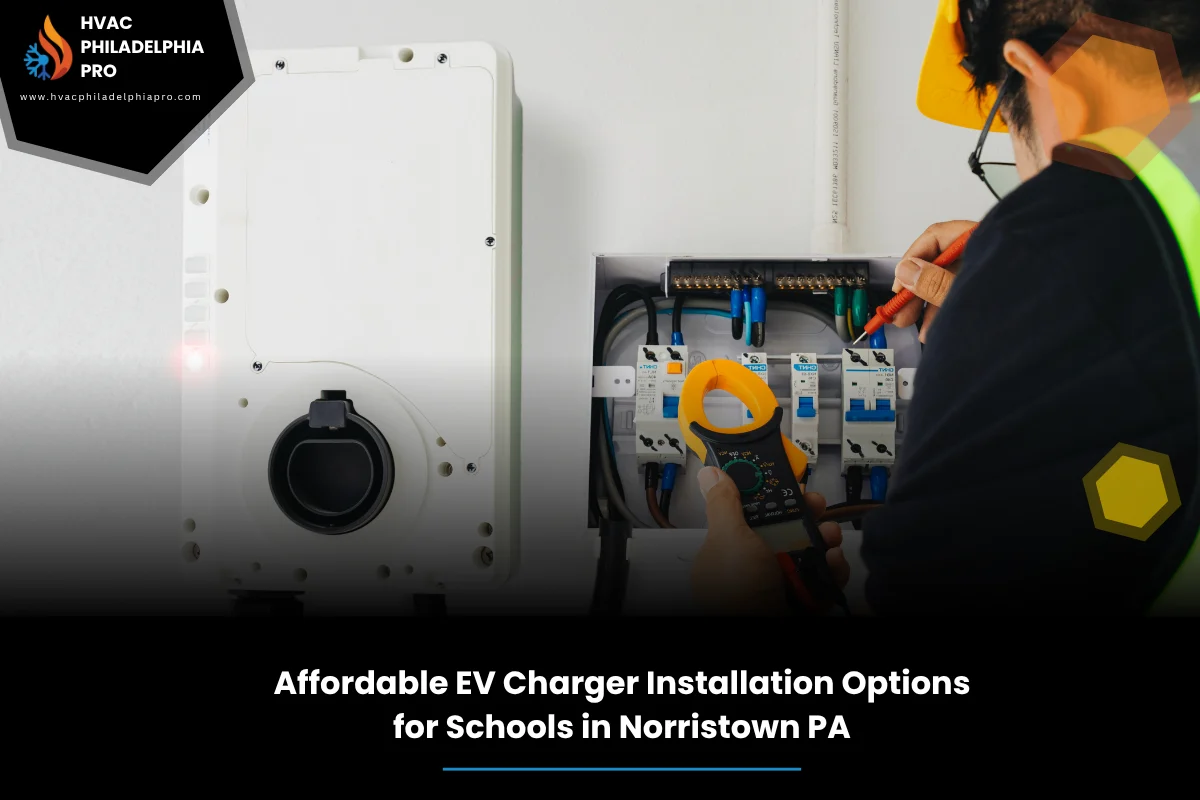
Schools in Norristown PA are seeing more staff and families arrive in electric cars. Planning chargers now keeps traffic smooth and shows real care for the community. If you’re sorting options, start with the basics, pick a smart layout, and keep future needs in mind. It does not have to be hard or costly.
Many decision makers search for affordable EV charger installation in Philadelphia PA because the region shares codes, utility rules, and vendor coverage. You can compare choices, build a simple plan, and move in phases without risking the budget. When you need a reference point for services in the city, review affordable EV charger installation in Philadelphia PA to see common options that also fit nearby schools.
HVAC Philadelphia Pro supports facilities work across HVAC, electrical, and more. This guide focuses on school charging choices and the steps to roll them out with clarity and control. We lean on simple language, practical steps, and a steady pace so your team can make a sound plan.
Table of Contents
Quick Summary
Start small. One to four Level 2 ports near staff parking will cover most daily needs. Use load management to avoid costly power upgrades. Confirm trenching paths, ADA access, and student safety rules before final layout. Phase 1 can be a pilot. Phase 2 adds more ports where demand proves out.
Budget for hardware, installation, panel work, network fees, and signs. Compare basic wall units to networked pedestals. Draft a simple use policy that sets hours, fees, and time limits. Train onsite staff to reset units and read logs. Keep receipts and photos for any grants or rebates you pursue.
Why EV Charging Makes Sense for Schools
Teachers often park for six to eight hours, which matches Level 2 charging speeds well. Visitors and after-school events add light demand, not a surge. A few well-placed ports can serve many drivers each week and build goodwill fast.
School campuses also offer safe, well-lit parking with clear oversight. That reduces wear, vandalism risk, and confusion. For broader background on codes, hardware, and safety, see Complete Guide to EV Charger Installation in Philadelphia PA for Homes and Small Facilities and adapt those ideas for a school setting.
Charger Types Schools Should Consider
Most schools choose Level 2 stations. They are cost-effective, flexible, and meet staff needs during the school day. DC fast charging is great for highway stops but is pricey to buy and run. Level 1 is cheap but too slow for daily turnover.
| Type | Best Use | Pros and Considerations |
|---|---|---|
| Level 2 chargers | Staff lots, daytime charging | Balanced cost and speed; supports load management; fits most cars |
| Level 1 outlets | Overflow or long, overnight parking | Very low cost but slow; limited turnover for shared spaces |
| DC fast charging | Rare campus need | High cost and demand charges; only for special cases |
According to the U.S. Department of Energy’s Alternative Fuels Data Center, Level 2 charging is common at workplaces and public destinations because it balances cost, speed, and grid impact (U.S. Department of Energy, Alternative Fuels Data Center). Alternative Fuels Data Center
Site Planning That Fits a School Schedule
Start with a quick map of staff and visitor parking. Note panel locations, trenching paths, and any trees or drains. Shorter wire runs save time and cost. Keep stations close to entrances with clear lines of sight.
Check utility meters and identify the nearest panel with spare capacity. Confirm bollards, wheel stops, and lights. Early talks with facilities and security smooth the path for permitting, signage, and ADA access. If you want a deeper primer on residential and small-facility steps, read Complete Guide to EV Charger Installation in Philadelphia PA for Homes and Small Facilities and apply the relevant parts to campus layouts.
Power Capacity, Panels, and Smart Load Management
Older school buildings sometimes have tight panels. Before new breakers go in, gather panel photos and spare capacity data. Many districts avoid a service upgrade by using load management so chargers share power when demand spikes.
Most networked Level 2 units let you cap total amperage or schedule output by time of day. That way, multiple cars charge smoothly during class hours and taper off when buses roll in. Your electrician can help set these rules in the charger software.
Budgeting, Grants, and Ongoing Costs
Break the budget into five parts: hardware, installation labor, make-ready work, networking, and signs. A clear split helps compare quotes and decide what to phase now or later. If a run is long, consider moving a port a few spots to cut trenching distance.
Grants and rebates change often. Keep simple records of quotes, serial numbers, and work photos. That file speeds up paperwork and payment later. Assign one staff member as the custodian of this grants folder.
Step-by-Step Framework for a Smooth Rollout
This simple framework keeps the project moving without surprises. It also helps you communicate progress to your board and community.
Pilot phase: Start with two to four ports near the main entrance or staff lot. Use load sharing to avoid upgrades. Add signs and a short how-to guide for staff.
Data phase: Track usage, turnover, and any issues. Adjust time limits and pricing if used. Document small fixes now so you avoid bigger ones later.
Scale phase: Add ports where cars actually park. Expand to a second lot if demand grows. For broader planning context, see the complete guide on this topic and align those steps with school calendars, exams, and events.
Access, Safety, and Student Use Policies
Keep stations visible and well lit. Provide one ADA-accessible space in the group so drivers of all abilities can reach the cable. Post clear hours and time limits so cars move when full.
Draft a short policy that covers student use, fee settings if any, and campus quiet hours. Train front desk or facilities staff on resets, cord checks, and cable care. That routine builds a culture of ADA access and safety.
Working With Your Electrician and Vendors
Choose proven hardware with solid support. Ask for panel photos, a one-line diagram, and a trench sketch in the quote. That detail keeps surprises low and schedules tight.
When evaluating an EV charger electrician in the region, look for clear labeling, torque logs, and as-built notes. Request a brief training session for your onsite team after commissioning. Keep spare holsters and labels on hand.
Typical Price Ranges for School Chargers
These are broad estimates for planning in USD. Actual pricing may vary depending on scope and requirements.
| Tier | What You Get | Estimated Range |
|---|---|---|
| Basic | Wall-mounted Level 2, short run, simple signage | USD 3,000 to 7,000 per port |
| Mid-range | Pedestal Level 2, moderate trenching, networked control | USD 7,000 to 15,000 per port |
| Advanced | Pedestal pairs, long trenching, load management, accessories | USD 15,000 to 35,000 per port |
Plan for extras: panel upgrades if needed, pavement repair, bollards, and annual network fees. Keep a small reserve for paint, stencils, and replacement holsters.
Operations, Maintenance, and Uptime
Build a light routine. Weekly: inspect cords and holsters. Monthly: check logs for faults and confirm firmware updates. Each semester: tighten lugs and clean pedestals as needed.
Document every reset and fix. A simple checklist prevents repeat issues and keeps uptime high. Over time, this preventive maintenance log proves return on investment to your board.
Local Notes for Norristown and the Philly Suburbs
Norristown schools benefit from a shared vendor pool with nearby districts. When staff search “EV charging station installation near me,” they often see similar hardware and support across the region. That helps with training and parts.
If you need multi-site planning, look at “commercial EV charger installation in Philadelphia” providers that also cover Montgomery County. For most campuses, “Level 2 EV charger installation in Philadelphia” specs will match Norristown needs with minor tweaks for site layout.
Comparison: Networked vs Non-Networked Level 2
| Feature | Networked Level 2 | Non-Networked Level 2 |
|---|---|---|
| Access Control | Cards, apps, time rules | Open access |
| Load Management | Yes, software-based | Manual or panel-based |
| Reporting | Usage and fault logs | Limited or none |
| Upfront Cost | Higher | Lower |
| Ongoing Fees | Subscription likely | None |
For many schools, non-networked units work fine in staff lots. If you need usage data or access rules, choose networked. Either way, plan for clear signs and simple user guides.
FAQs
-
How many chargers should a school start with?
Start with two to four Level 2 ports in the busiest staff lot. Expand only when usage proves steady. This keeps upfront costs down while you learn real patterns.
-
Do we need a service upgrade to add chargers?
Not always. Many campuses avoid upgrades by using load sharing and scheduling. An electrician should check panel capacity and suggest the best path.
-
Where should chargers be placed for safety and access?
Install near entrances, under good lighting, and close to panels to limit trenching. Include at least one accessible space and add clear signs and wheel stops.
-
What is the difference between Level 1, Level 2, and DC fast?
Level 1 is slow and low-cost. Level 2 fits school days with balanced speed and price. DC fast is very quick but expensive to buy and operate.
-
Can we charge a small fee to cover costs?
Yes. Many sites set a modest per hour or per kWh fee and time limits. Keep it simple and post the rules on a sign near the stations.
-
Who handles daily issues like fault resets?
Train one facilities staff member to check cords, reset breakers, and call support if needed. Keep a short checklist and contact numbers in the office.
-
Should we buy networked chargers?
If you need user access rules and usage data, yes. If staff-only access is fine and costs must stay low, non-networked may be enough.
-
How do we plan for future growth?
Install conduit and extra capacity now if possible. Start with a pilot, gather data, then add ports in the areas with the most demand.
Conclusion
For schools in Norristown PA, the smartest path is simple: start small, place chargers where staff park, and build in room to grow. With careful planning and strong basics, you can meet demand without stress or waste. Many districts research affordable EV charger installation in Philadelphia PA and apply those lessons right here.
Choose Level 2 for most cases, use load management to control power, and keep a clean maintenance routine. Contact HVAC Philadelphia Pro for expert assistance. With a steady plan and a phased rollout, your campus can support clean travel today and scale up when the community needs it.
continue reading
Related Posts
Learn how to choose EV charger repair near me with clear safety checks, a simple shortlist framework, and provider comparisons so you can fix issues fast and right.
Power failures can freeze business chargers. Learn fast triage, common faults, and safe fixes for Marlton NJ sites, plus when to use emergency EV charger repair in Philadelphia.
Practical guidance for Springfield PA businesses on EV charging station repair in Philadelphia, with fast triage steps, safety basics, network vs standalone tips, and industry-specific advice.