
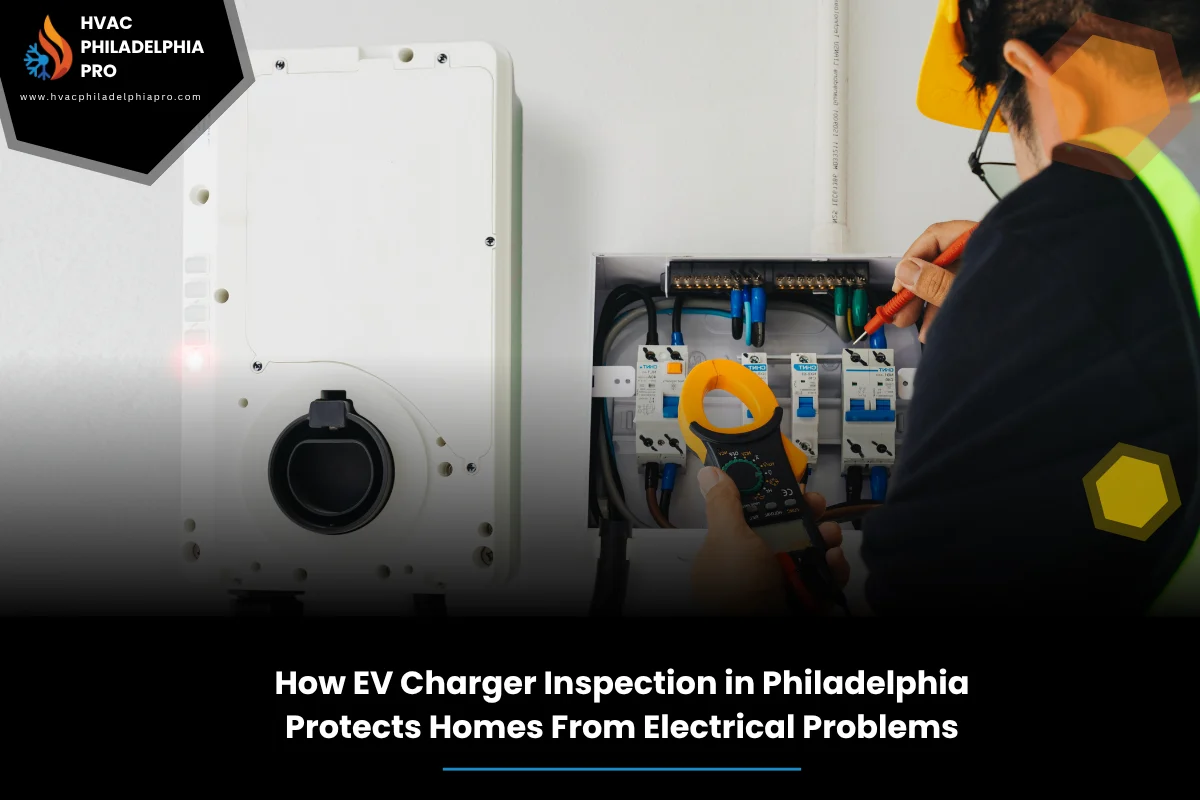
Home charging should feel simple and safe. A thorough EV charger inspection in Philadelphia helps catch small issues early, before they spark bigger electrical problems. It looks at wiring, breakers, grounding, and charger settings so your car, panel, and home all work in sync without strain.
The first step is knowing what to check and when. If you want a pro set of eyes, you can schedule an EV charger inspection in Philadelphia to verify safety, code fit, and steady performance.
Many homes, apartments, condos, townhomes, and villas use Level 2 chargers now. That adds load to panels that may already power heat, cooling, stoves, and more. The team at HVAC Philadelphia Pro sees the same risk patterns often: loose lugs, tired breakers, undersized circuits, or cables run the wrong way. An inspection finds these early so you can fix them on your terms.
Table of Contents
Quick Summary
Think of an inspection as a health check for your EV charging setup. It tests the charger, circuit, grounding, and GFCI, reviews wire size and breaker fit, looks for heat at connections, and confirms the charger is set to the right amperage. It also flags signs your system needs care, from tripped breakers to slow charging.
Want a longer read on maintaining a safe setup over time? See Complete Guide to EV Charger Maintenance in Philadelphia PA for Reliable Home Charging for planning tips, cleaning steps, and record keeping ideas.
What an Inspection Checks and Why It Matters
A good inspection reviews the full path from panel to car. That includes wire gauge, breaker type, grounding, and the charger’s max output. The tech also looks for heat marks, loose terminations, nicked insulation, and any water entry at the outlet or wall unit.
Testing often includes a load test to see if voltage holds steady while charging ramps up. If lights dim or the breaker runs hot, the circuit may be undersized. Small fixes now prevent nuisance trips, scorched outlets, or worst of all, a fire risk.
This is also where EV charger maintenance in Philadelphia PA ties in. After safety is confirmed, routine care keeps dust, moisture, and vibration from chipping away at performance over time.
Common Electrical Risks to Watch at Home
Most problems trace back to heat and weak connections. A loose lug on a breaker or outlet can arc under load. An outlet not rated for continuous duty can warm up fast. Moisture at an outdoor unit can corrode terminals and shorten the charger’s life.
All EV circuits should have ground fault protection. If that protection is missing, tripping often, or bypassed, fix it right away. Also check for shared circuits. Level 2 chargers need a dedicated line so dryers, ovens, or heaters don’t stack load on the same breaker.
For the bigger picture on long-term care in our area, keep that complete maintenance guide concept in mind as you set your routine and plan upgrades over time.
Signs Your EV Charger Needs Maintenance
Pay attention to odd behavior. Buzzing, clicking, or a hot faceplate hints at trouble. Breakers that trip more than once need a look. Slow charging, random stops, or charge cables that feel hot are classic early warnings.
Look for cracks in the cord jacket, bent pins in the connector, or a charger that shows error lights. Any smell of hot plastic means stop and assess. An overheating plug or cable is never normal and often points to a loose fit, dirt in the connector, or stressed wiring.
If these show up, pause use and plan a check. Problems caught early are faster and cheaper to correct.
Preventative EV Charger Maintenance Schedule
Simple care prevents most headaches. Dust off the wall unit and gently wipe the cable and handle. Keep the cord off the ground where water can pool. Coil it loosely. Never kink it. Check for nicks or cuts before each charge.
Do a quick monthly look: feel for warmth at the outlet or breaker after a charge, confirm the cable latch still clicks firm, and make sure the charger’s vents stay clear. One annual EV charger maintenance visit can test torque on lugs, check GFCI function, and verify firmware or settings.
In short, preventative EV charger maintenance keeps your setup steady. Those small habits reduce wear and help your inspection pass without surprises.
Homeowner Safety Framework: 10-Minute Pre-Check Before Charging
Use this fast routine to spot trouble before it grows. It’s not a full inspection, but it keeps you aware. If anything seems off, stop and plan a deeper check. For step-by-step maintenance beyond this quick look, follow the complete guide on this topic when you map out your schedule.
Step 1: Do a brief visual inspection. Look for cracks, scorch marks, or moisture on the charger body and outlet. Step 2: Scan the cable for cuts or flat spots.
Step 3: Check cable end and pins. They should be clean and straight. Step 4: Start a charge and watch the first minute. The charger should ramp smoothly with no clicks or flickers. Step 5: After a few minutes, touch near the plug lightly. Warm is okay; hot is not.
Step 6: End the session and store the cable off the floor. If you find heat, errors, or a loose plug, pause use and schedule an annual EV charger maintenance check soon.
Inspection vs Maintenance vs Repair: Key Differences
Use this at-a-glance table to keep terms straight. It helps you plan the right action when something changes.
| Aspect | Inspection | Maintenance | Repair |
|---|---|---|---|
| Goal | Find risks, confirm safety and code fit | Prevent wear, keep performance steady | Fix faults or replace failed parts |
| When | Before first use, after changes, yearly | Monthly light care, yearly deep service | When warnings, errors, or damage show |
| Scope | Panel, breaker, wiring, charger settings | Cleaning, torque checks, firmware | Rewire, swap breaker, replace outlet or unit |
| Example | Diagnostic inspection of GFCI and load | Clean vents, verify cable, tighten lugs | Replace burned receptacle or faulty EVSE |
Inspections and maintenance work together. Inspection finds issues; maintenance keeps them from coming back. If damage appears, repair resets the system to a safe baseline.
Housing Types: Homes, Apartments, Condos, Townhomes, Villas
Each property type has its own quirks. Homes may need a panel upgrade or a dedicated circuit run to a garage. Apartments and condos often involve shared spaces, HOA rules, and strict routing paths for conduit.
Townhomes share walls, which affects routing and fire-stop rules. Villas may have detached garages that need trenching, weatherproof gear, and careful drainage. In multi-unit spots, verify permissions and label panels to avoid cross-feeds.
Pay extra attention to shared electrical rooms in apartments and condominiums. Clear labeling, load calculations, and lockable disconnects reduce mix-ups and keep access safe for everyone.
Note for Philadelphia Northeast PA
For Philadelphia Northeast PA properties, check panel space first. Many older homes use legacy panels with limited room. Winter salt and moisture can corrode outdoor connectors faster, so add more frequent quick checks during cold months.
FAQs
- How often should I schedule an EV charger inspection?
Plan a full check before first use, after any electrical changes, and about once a year. If you notice heat, trips, or error lights, move that inspection up instead of waiting.
- What are the top signs your EV charger needs maintenance?
Warm or hot outlets, tripping breakers, slow or random charge stops, cracked cables, bent pins, or error LEDs are common signs your EV charger needs maintenance soon.
- Can I use an extension cord with my Level 2 charger?
No. Extension cords add resistance and heat, and most are not rated for continuous EV load. Use a dedicated circuit with the correct wire size and breaker rating.
- What is preventative EV charger maintenance at home?
Light monthly cleaning, cable checks, keeping water out, and a yearly torque and GFCI test. It prevents small issues from turning into repair jobs later.
- Do I need a dedicated circuit for a Level 2 EV charger?
Yes. Level 2 charging is a continuous load and should be on a dedicated circuit sized for the charger’s rated current and duty cycle.
- Is outdoor charging safe in rain or snow?
Yes, if the charger is rated for outdoor use and installed correctly. Keep connectors clean and dry, use in-use covers where needed, and inspect for moisture entry.
Conclusion
A careful EV charger inspection in Philadelphia reduces risk, prevents surprise outages, and keeps charging smooth day after day. Pair that with steady habits and a yearly check, and your setup will run safer and last longer.
Keep an eye on the basics: tight connections, clean cables, correct breaker size, and healthy GFCI. When you need help, or a neutral second look, Contact HVAC Philadelphia Pro for expert assistance. And remember, regular EV charger maintenance in Philadelphia PA supports reliable home charging for years to come.
continue reading
Related Posts
Learn how to choose EV charger repair near me with clear safety checks, a simple shortlist framework, and provider comparisons so you can fix issues fast and right.
Power failures can freeze business chargers. Learn fast triage, common faults, and safe fixes for Marlton NJ sites, plus when to use emergency EV charger repair in Philadelphia.
Practical guidance for Springfield PA businesses on EV charging station repair in Philadelphia, with fast triage steps, safety basics, network vs standalone tips, and industry-specific advice.