
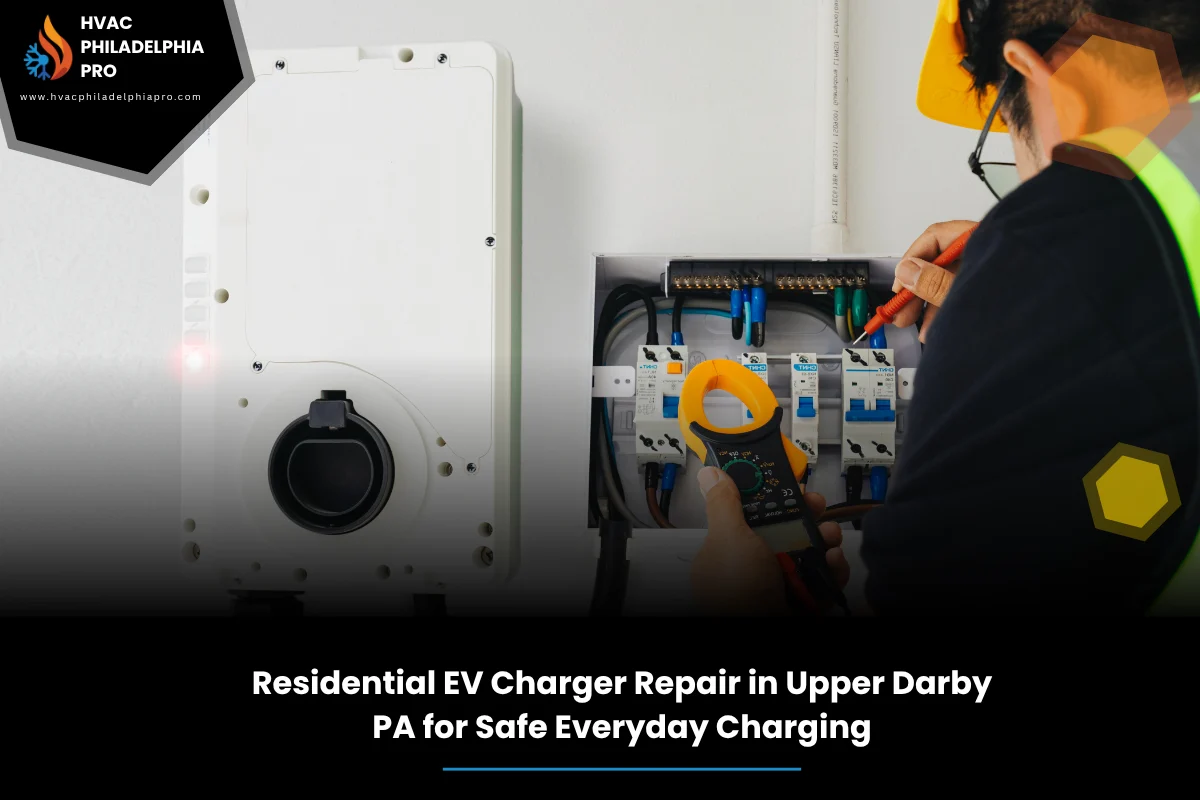
Home charging should feel simple and safe. If your charger starts acting up, you need clear steps, not guesswork. This guide explains how to spot issues early, what checks you can do safely, and when to call for help. We also connect the dots with safety rules, hardware limits, and smart habits that prevent repeat problems.
When you search for residential EV charger repair in Philadelphia, you want real answers fast. If you need hands-on help, learn more about residential EV charger repair in Philadelphia to understand what a technician typically inspects and how repairs are handled.
HVAC Philadelphia Pro handles electrical and safety issues with a steady, practical approach. We focus on clean checks, clear explanations, and fixes that last. Use this article to frame your own at-home steps and to know what to expect during a professional visit.
Table of Contents
Quick Summary
Most charging trouble falls into a few buckets: power supply, ground fault trips, cable or connector wear, communication errors, or software bugs. Start with safe basics: check the breaker, GFCI, charging schedule, and vehicle settings. Look at lights and error codes on the charger. Try another outlet or circuit if you use a portable unit.
If the EV charger won’t charge the vehicle or keeps stopping, confirm the outlet or circuit rating, look for heat at the plug, and test a second cable if you have one. Document error messages and take photos. A solid EV charger diagnostic service uses meter checks, load tests, and firmware review to find the real cause before changing parts.
Why Safe Everyday Charging Matters at Home
Everyday charging adds repeat load to your home wiring. Good design and upkeep keep that load safe. A proper circuit, tight terminations, and GFCI protection reduce shock and fire risks. If you want a deeper dive into signs, steps, and pro-level methods, read the Complete Guide to EV Charger Repair in Philadelphia PA for Homes and Businesses which frames repair logic from basics to advanced checks.
Smart chargers add timers, demand response, and updates. Those help, but they also add new failure points. Keeping firmware current and using a stable Wi-Fi network avoids odd dropouts that look like hardware failure.
Common EV Charger Symptoms and What They Mean
If your EV charger not working shows no lights, start with the breaker and GFCI. Confirm the outlet or hardwired connection has power. For portable units, inspect the plug blades for discoloration. Warm outlets, buzzing, or repeated tripping hint at loose connections or overloads.
When the EV charger won’t charge vehicle but lights look normal, suspect a communication handshake issue. Try reseating the connector, cleaning contacts, and rebooting the charger. Test the car at a known good station if possible. If the car charges elsewhere, focus on the home unit.
Intermittent stops point to heat, weak Wi-Fi, a worn cable, or a breaker near its limit. Record the time of day and load in the home when it happens. Those notes speed up diagnosis.
Upper Darby PA Home Realities: Power, Panels, and Parking
Many older homes here have smaller panels and shared circuits in garages or basements. Level 2 charging needs a dedicated circuit that matches the charger rating. A quick load calculation helps confirm if the panel can support it without nuisance trips or dimming lights.
Detached garages and long runs add voltage drop. That can trigger under-voltage faults at higher charge rates. A thicker wire gauge or shorter run solves it. If parking is outdoors, weatherproof covers and tight conduit seals keep moisture away from sensitive electronics.
DIY Checks vs When to Call a Pro
Do home checks that are safe and simple. Verify the breaker is on, inspect for damage, confirm schedules, and update firmware. Swap to a lower amp setting in the charger app and try again. These steps often clear software or load bumps.
Call a pro when you see burned plastic, tripping that repeats, a hot breaker, or corrosion inside the unit. These call for insulation testing, torque checks, and circuit verification with proper tools. Avoid opening sealed modules or working inside a live panel.
Diagnostic Framework You Can Follow
Use this short workflow when charging problems start. It keeps things safe while giving clean clues to a technician later. If you want a broader plan that aligns with pro methods, compare these steps with the complete guide on this topic so your notes match common repair paths.
Diagnostic workflow for homeowners:
1) Power path: Check the breaker, GFCI button, and any wall switch that might control the outlet. Try a known-good device in the same outlet for portable chargers.
2) Charger status: Note light codes, app alerts, and error numbers. Reboot the charger by power-cycling if the maker allows it.
3) Cable and connector: Inspect the cable for cuts or stiffness. Clean the connector with a dry, lint-free cloth. Reseat it firmly.
4) Vehicle side: Confirm the car is not in a delayed charge mode and has no charging alerts. If possible, charge at a public station to isolate the issue.
Comparison: Symptoms vs Likely Causes vs First Checks
| Symptom | Likely Cause | First Check |
|---|---|---|
| No lights on charger | Tripped breaker or GFCI, no supply | Breaker reset, test outlet with lamp |
| Stops charging after minutes | Overheating, weak circuit, cable damage | Feel for heat, lower amp setting, inspect cable |
| Car shows charging error | Handshake or software glitch | Reboot charger, update firmware, try another station |
| GFCI trips often | Ground fault, moisture ingress | Dry area, check covers, let unit rest before retry |
| Slow charging | Low circuit rating, voltage drop | Check charger amp setting, try shorter run outlet |
Charger Types, Connectors, and Communication
Level 1 uses a standard 120V outlet and fits overnight needs. Level 2 runs on 240V and cuts charge time. Most home units use J1772 or a brand adapter. The core is a safe pilot signal that sets the allowed current and manages start-stop logic.
When that pilot path is weak, the car may click on and off. Cable strain, water in the holster, or bent pins can disrupt the signal. Handle the connector gently, avoid looping tight coils, and store it where it stays dry.
Preventive Care to Keep Charging Safe
Make a simple monthly habit. Look for nicks on the cable, check that screws are snug on the wall mount, and clear dust from vents. Lightly clean the connector and keep it off the ground. A short preventive maintenance routine avoids many intermittent faults.
Each season, review the charger’s app settings, update firmware, and confirm Wi-Fi strength. If the breaker has tripped in the past, ask for a pro torque check. Heat cycles can loosen lugs over time.
Understanding EV Charger Diagnostic Service
A proper EV charger diagnostic service starts with interviews and photos. Then comes meter testing, ground checks, and a careful look at terminations. Many issues show up as voltage sag under load or small ground faults that a GFCI catches.
Good diagnostics end with a clear report: the cause, the fix, and how to prevent it. Expect a short summary you can keep. That helps if the issue comes back or if you upgrade later. Clear root cause notes are worth it.
Codes, Safety, and Home Electrical Basics
Dedicated circuits, correct breaker types, and tight connections are not optional for charging. Outdoor installs need weather-rated parts and drip loops. Moisture and poor terminations lead to many failures. A professional will use a torque tool and test for proper ground before any high-load test.
According to the U.S. Department of Energy’s Alternative Fuels Data Center (n.d.), home charging safety depends on using equipment certified for residential use, proper circuit sizing, and following manufacturer instructions for installation and operation. AFDC: Charging at Home
When Replacement Makes More Sense Than Repair
Some failures cost more to chase than to replace. Cracked housings, water damage inside, or burned boards usually point to a new unit. If you want smarter features, a replacement can also add scheduling, load sharing, and better reporting.
Before you swap, confirm panel capacity and circuit size. A short future-ready plan now avoids rework later if you add a second EV or raise charge rates.
FAQs
- Why does my charger keep tripping the GFCI?
Moisture, cable damage, or a small ground fault can cause trips. Let the unit dry, inspect the cable, and try again. If it repeats, call a pro for insulation and ground tests.
- My charger lights are on, but the car will not charge. What now?
Reseat the connector, reboot the charger, and check the car’s charging settings. Try a known good station to isolate whether the issue is with the car or the home unit.
- Can I use an extension cord with a portable Level 1 charger?
It is not recommended. Extension cords can overheat under continuous load. If you must, use a heavy-duty, short cord rated for the load, but the safer choice is a dedicated outlet.
- How often should I update charger firmware?
Check quarterly or when you see odd behavior. Updates can fix bugs, improve communication, and add features. Follow the manufacturer’s instructions.
- What size circuit do I need for Level 2?
It depends on the charger’s rated current. Many Level 2 units need a dedicated 240V circuit sized at 125 percent of continuous load. A licensed electrician should confirm the exact rating.
- Is slow charging bad for the battery?
Level 1 and Level 2 charging are generally gentle on batteries. The car’s battery management system controls the charge. Slow charging is fine for daily use.
- How do I know if the cable is failing?
Watch for kinks, cuts, stiffness, or heat spots. If the car stops when the cable moves, that is a red flag. Replace damaged cables to avoid further issues.
Conclusion
Safe home charging comes down to clean power, a sound circuit, and steady habits. When trouble starts, use simple checks to separate power, charger, cable, and car. If it persists, a structured EV charger diagnostic service finds the cause without guesswork. That is how root cause beats repeat failures.
For larger issues or recurring trips, do not push through it. Get a qualified technician to verify wiring, terminations, and settings. If you need guidance or inspection for residential EV charger repair in Philadelphia, reach out for help you can trust. Contact HVAC Philadelphia Pro for expert assistance.
continue reading
Related Posts
Learn how to choose EV charger repair near me with clear safety checks, a simple shortlist framework, and provider comparisons so you can fix issues fast and right.
Power failures can freeze business chargers. Learn fast triage, common faults, and safe fixes for Marlton NJ sites, plus when to use emergency EV charger repair in Philadelphia.
Practical guidance for Springfield PA businesses on EV charging station repair in Philadelphia, with fast triage steps, safety basics, network vs standalone tips, and industry-specific advice.