
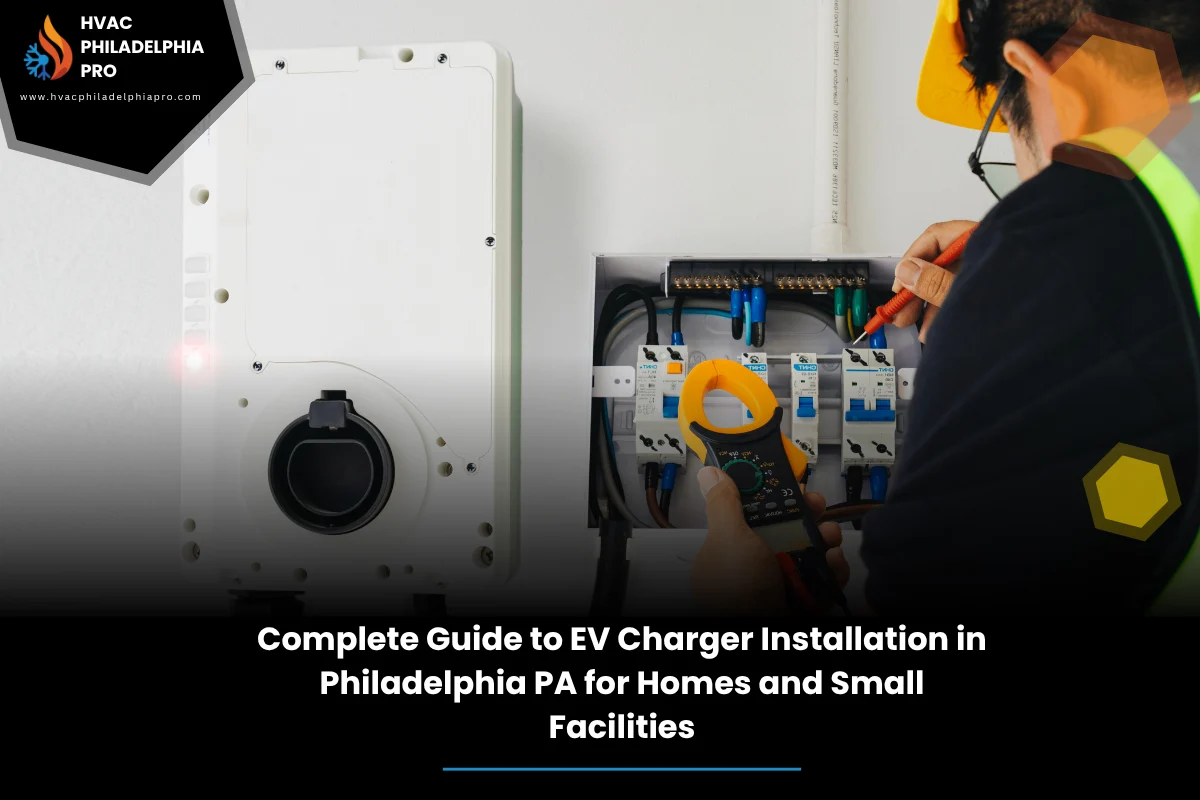
If you own an EV, charging at home or at a small facility changes the whole experience. Public charging still matters, but daily use gets easier when charging happens where people already live, work, study, or gather. This guide explains EV charger installation in Philadelphia PA in plain terms, from basic equipment choices to permits, electrical limits, and site planning.
HVAC Philadelphia Pro works on residential and commercial systems across Philadelphia, including electrical work tied to new equipment and property upgrades. That practical, jobsite view matters here. EV charging sounds simple at first, but panel capacity, wiring paths, outdoor exposure, parking layout, and code steps can change the plan fast.
This article focuses on homes and small facilities that need a clear starting point. That includes Community Centers, Schools, Colleges, Churches, and Mosques. You will see how to compare charger types, think through safety, understand cost drivers, and decide what setup fits the property without overbuilding or guessing.
Table of Contents
Quick Summary
EV charger installation means adding the electrical equipment, circuit protection, wiring, and mounting needed to charge an electric vehicle safely at a property. In most cases, the key decision is whether a standard outlet is enough or whether a faster Level 2 charger makes more sense.
For many homes, Level 2 charging offers the best mix of speed and daily convenience. For small facilities, the right setup depends on who will use the charger, how long vehicles stay parked, and whether the site may need more chargers later. Indoor and outdoor installs both work, but each one has different layout and weather concerns.
Permits, panel capacity, and installer skill matter more than brand hype. A qualified electrician should inspect the service panel, confirm the load, map the wiring route, and explain the safest path forward. Deeper topic guides appear throughout this article so readers can move into the exact next step they need.
What EV charger installation really includes
Electric vehicle charger installation is more than hanging a box on a wall. A proper install may include a load review, breaker sizing, new wiring, conduit, wall mounting, weather-rated parts, testing, and permit coordination. Some projects also need panel upgrades or a new 240V outlet installation for EV charger use.
At home, the charger often goes in a garage, driveway edge, or side wall near parking. In small facilities, the work may also involve striping, access planning, and deciding whether staff, visitors, or members will share the station. That early planning keeps the setup useful instead of awkward.
Many owners start with a simple question: plug-in charger or hardwired charger? That answer depends on amperage, future flexibility, and local code needs. Hardwired units often suit permanent, higher-output installs, while plug-in setups can work well when the circuit and outlet are designed correctly. How Homeowners Can Plan Safe EV Charger Installation in Philadelphia PA
Safe planning starts before any drilling or wiring begins. The property has to support the charger, the cable has to reach the vehicle cleanly, and the final setup should avoid trip hazards, cord strain, and water exposure.
Home charging options and what usually fits best
Home EV charger installation usually falls into two paths. The first uses a basic Level 1 setup from a standard outlet. The second uses a dedicated 240-volt circuit for faster charging. Most drivers who use their EV every day end up looking hard at Level 2 because it cuts charging time by a lot.
Residential EV charger installation in Philadelphia also depends on parking style. A garage EV charger installation often gives the cleanest wiring route and better weather protection. An outdoor EV charger installation can work just as well when the equipment is rated for the location and the cable path stays neat and protected.
Brand choice matters, but only after the electrical basics make sense. Some owners ask for Tesla Wall Connector installation in Philadelphia, while others want ChargePoint charger installation in Philadelphia or JuiceBox charger installation in Philadelphia. Those are normal choices, but the right answer still depends on panel space, charging habits, and where the car actually parks. What to Expect from Residential EV Charger Installation in Philadelphia Homes
Most homes do not need a huge charging system. They need a setup that matches the vehicle, the commute, and the house electrical capacity. That simple match is what keeps the project practical.
Why Level 2 often becomes the smart upgrade
Level 2 charging uses a 240-volt circuit and gives much faster charging than a standard wall outlet. That makes it a strong fit for drivers who commute daily, own larger battery vehicles, or want overnight charging that actually resets the battery for the next day.
In real life, that means less planning around battery range and fewer extra stops at public stations. It also helps households with more than one driver or more than one EV. For small facilities, Level 2 EV charger installation in Philadelphia can support staff or member parking far better than slow charging.
EV charger installation in Philadelphia PA often starts with this upgrade question because the charger speed affects circuit size, equipment choice, and placement. A faster charger is not always the answer, but a dedicated Level 2 setup often gives the most usable result for daily charging. Why Level 2 EV Charger Installation in Philadelphia Is Worth the Upgrade
Once owners understand the speed difference, the next step is making sure the property can support it safely. That is where a site review matters more than marketing claims on the charger box.
How to choose the right installer
Installer selection should focus on electrical skill, clear inspection steps, and practical communication. A good EV charger electrician in Philadelphia should explain panel capacity, circuit needs, mounting options, and whether the job needs a permit. They should also talk through any limits before work starts.
Be careful with vague promises like same day EV charger installation in Philadelphia if the property has an older panel or unknown wiring conditions. Fast scheduling can be helpful, sure, but speed should never replace inspection. The best EV charger installer in Philadelphia for one property may not be the best fit for another if the job needs heavier electrical work or outdoor routing. Choosing the Best EV Charger Installer in Philadelphia for Your Home
One simple rule holds up well: ask who will assess the load, who will pull the permit if needed, and how the final testing gets documented. If those answers are fuzzy, keep looking. Why Hiring an EV Charger Electrician in Philadelphia Is Safer Than DIY
DIY charging work creates real risk because the system draws serious power for long periods. A charger may look like a small appliance, but the circuit behind it has to be designed and installed the right way.
Common site conditions that shape the project
Site conditions decide a lot of the final plan. Distance from the panel to the charger matters because longer runs can mean more labor, more conduit, and tougher routing. Parking layout matters too, since a charger that barely reaches the port becomes annoying every single day.
Older Philadelphia homes can add another layer. Some have limited panel space, aging wiring, detached garages, masonry walls, or service sizes that need closer review before adding a dedicated charger circuit. Those details do not stop the project, but they do change the work. Common EV Charger Installation Problems in Older Philadelphia Homes and How to Fix Them
Outdoor installs bring their own issues. Weather exposure, snow, rain, direct sun, and the need to protect cords from damage all affect the equipment location and hardware choices. Solving Outdoor EV Charger Installation Challenges in Urban Philadelphia Properties
Even a garage EV charger installation needs thought. Tight parking, shared storage walls, and the vehicle charge port location can make one wall a much better choice than another.
Permits, code checks, and utility awareness
Permitting is the formal review process that helps confirm electrical work meets local requirements. Whether a permit for EV charger installation in Philadelphia is required depends on the scope of work and the final configuration. A qualified installer should explain that early, not after the job begins.
Permits matter because EV chargers create a continuous electrical load. That means breaker sizing, conductor sizing, disconnect needs, and equipment ratings all have to line up. According to the U.S. Department of Energy, home charging setup should match both the vehicle and the electrical system at the property. U.S. Department of Energy home charging guidance
To know more about: How to Get a Permit for EV Charger Installation in Philadelphia Without Delays
It also helps to ask about utility programs and EV charger installation rebates in Pennsylvania, but owners should verify current rules and availability before counting on them. If rebate details matter for a project decision, use this note: current Pennsylvania EV charging rebate or incentive program details.
Pricing models and what affects cost
EV charger installation cost in Philadelphia depends on labor scope, electrical capacity, wiring distance, charger type, mounting surface, and permit steps. A simple install near the panel usually costs less work than a long conduit run to a detached parking area. Outdoor work can also add weather-rated materials and more protection steps.
Pricing factors often include whether the charger is hardwired or plug-in, whether a 240V outlet installation for EV charger use is needed, and whether the panel has open capacity. If the panel needs changes, the project can shift from a basic install into a broader electrical upgrade.
For small facilities, cost planning should also include future use. One charger may solve the current need, but conduit planning or panel allowance for a second unit later can save rework. Readers who want a deeper breakdown can continue here. Understanding EV Charger Installation Cost in Philadelphia and What Affects Pricing
Affordable EV charger installation in Philadelphia PA does not mean choosing the lowest bid at any cost. It means matching the system to the real need, avoiding oversized equipment, and making sure the electrical work does not create problems later.
Smart chargers, brand choices, and future flexibility
Smart EV charger installation adds features like scheduling, usage tracking, app control, and in some cases load management. Those tools can help owners charge during preferred hours or monitor how often the station gets used. For small facilities, that data can help decide whether another charger is worth adding.
Brand selection should stay practical. Tesla Wall Connector installation in Philadelphia may make sense for Tesla owners who want a clean brand-specific setup. ChargePoint charger installation in Philadelphia or JuiceBox charger installation in Philadelphia may fit owners who want broad app features or mixed-vehicle flexibility. The charger should fit the vehicle mix, not just the logo.
Future flexibility matters too. If the household may add a second EV, or if a small facility may expand from one space to several, the installer should note that during the first design conversation. Planning ahead is often cheaper than reworking the whole route later.
Small facility charging for shared use
Commercial EV charger installation in Philadelphia for small facilities works best when the site has a clear user group. Community Centers may want visitor charging during events. Schools may want staff and family support during the day. Colleges may treat charging as a campus amenity. Churches and Mosques may focus on member use during services and programs.
The core questions stay simple. Who will charge there, how long will they park, and does the site need one dedicated charger or a path to more later? Those answers shape the electrical load, placement, and whether access controls matter. What Community Centers Should Know About Commercial EV Charger Installation in Philadelphia
Community Centers often need chargers near visible, easy-to-reach parking spaces. If a center serves visitors from nearby suburbs, planning may also tie into regional access patterns. How Community Centers Near King of Prussia Can Add EV Charging for Visitors
Schools usually need a different approach. Staff parking patterns, family pickup flow, and site safety all affect where charging should go and when people can use it. Planning EV Charger Installation for Schools in Philadelphia to Support Staff and Families
For sites in Norristown PA, budget pressure may shape the project even more, so phased planning can help keep the first install realistic. Affordable EV Charger Installation Options for Schools in Norristown PA
Colleges often think one step ahead. A charger may start as a student or staff amenity, then grow into a wider campus feature if use rises. How Colleges in Philadelphia Can Add EV Charging as a Campus Amenity
That same long view matters in Conshohocken PA, where expansion planning can prevent early layout mistakes. How Colleges in Conshohocken PA Can Plan for EV Charging Expansion
Churches and Mosques usually focus on service times, event schedules, and how members move through the property. The charger should support those patterns without blocking normal parking flow. Steps Churches in Philadelphia Can Take to Offer EV Charging for Members
Some congregations outside the city are already looking at charging as a practical member convenience, especially where drivers stay on site for longer gatherings. Why Churches in Mount Laurel NJ Are Adding EV Charging for Members
Mosques may see similar demand during prayer times, classes, and community events. Good placement keeps the charger useful without creating traffic pinch points. How Mosques in Philadelphia Can Plan Affordable EV Charging for Congregations
For properties in Blue Bell PA, the planning conversation may also include future growth and how to serve a larger user base over time. Planning EV Charger Installation for Mosques in Blue Bell PA to Serve Growing Demand
A simple comparison of common installation paths
| Setup | Best Fit | Main Benefit | Main Watchout |
|---|---|---|---|
| Level 1 from standard outlet | Light daily driving | Low equipment change | Slow charging speed |
| Level 2 plug-in charger | Homeowners with a proper 240V outlet | Faster charging with some flexibility | Outlet and circuit must be sized right |
| Level 2 hardwired charger | Daily drivers and permanent installs | Clean, stable setup | Needs careful circuit planning |
| Outdoor wall-mounted charger | Driveways and exterior parking | Works without garage access | Weather and cable protection matter |
| Shared small-facility charger | Community Centers, Schools, Colleges, Churches, Mosques | Supports staff, members, or visitors | Use rules and parking layout matter |
The table gives a quick view, but real properties often blend these factors. A home may need outdoor mounting with Level 2 speed. A small facility may begin with one shared charger and leave room for another later.
When fast scheduling makes sense
Fast scheduling can help when a new EV arrives soon, a lease changes, or a property needs charging before a program launch. Same day EV charger installation in Philadelphia may be realistic for straightforward jobs with open panel capacity, short wiring runs, and no unusual site barriers.
Still, not every property should rush. Older homes, outdoor trenching needs, or small facilities with shared parking usually need more planning. Speed is helpful only when the site conditions are already clear. Same Day EV Charger Installation in Philadelphia and When Fast Service Makes Sense
If an installer can move quickly and still explain the electrical scope clearly, that is a good sign. If speed replaces inspection, it is not.
Decision framework: how to choose the right setup
Decision framework means a short set of questions that helps narrow the right installation path. Use this before choosing a charger brand or asking for quotes.
- How often will the vehicle charge at this property? Daily charging usually points toward Level 2.
- Where does the vehicle park most of the time? Garage, driveway, lot edge, and shared facility parking all change the install path.
- Does the electrical panel have room and capacity? This affects whether the job stays simple or needs broader electrical work.
- Will the charger stay private or serve several users? Shared use may favor smart controls or a more visible location.
- Could the property need more chargers later? Planning for expansion now can avoid rework.
This framework works for homeowners and for small facilities. It also helps filter sales noise. The goal is not the flashiest charger. The goal is the right charger on the right circuit in the right spot.
FAQs
- What is the difference between Level 1 and Level 2 charging?
Level 1 uses a standard outlet and charges slowly. Level 2 uses a 240-volt circuit and charges much faster, which makes it a better fit for most daily drivers.
- Do I need a permit for EV charger installation in Philadelphia?
Some projects do require a permit, especially when new circuits or other electrical changes are involved. The installer should review the scope and explain the permit path before work starts.
- Can I install an EV charger outside?
Yes. Outdoor EV charger installation works well when the charger and all related parts are rated for the location and the cable path stays protected from damage and weather issues.
- Is a garage EV charger installation better than an outdoor setup?
Not always, but a garage often gives easier weather protection and cleaner wiring. Outdoor placement can still be the best choice when the vehicle parks in a driveway or lot.
- Will my electrical panel support a Level 2 charger?
Maybe. A qualified installer needs to inspect the panel, available space, and overall load before answering that. Some homes and small facilities support it easily, while others need changes first.
- How much does EV charger installation cost in Philadelphia?
The cost depends on wiring distance, panel capacity, charger type, mounting location, and permit needs. Simple jobs cost less work than projects that need long runs or electrical upgrades.
- Can small facilities install just one charger to start?
Yes. Many Community Centers, Schools, Colleges, Churches, and Mosques begin with one charger and plan the electrical layout so expansion stays possible later.
- What brands are common for home charging?
Tesla, ChargePoint, and JuiceBox are common names. The best fit depends on the vehicle, desired features, and how the charger will be used at the property.
- Is same day EV charger installation a good idea?
It can be, but only for straightforward projects with clear site conditions. If the property has an older panel or a tricky layout, a careful review matters more than speed.
Conclusion
EV charger installation in Philadelphia PA works best when the project starts with the property, not the product box. Homes need charging that fits daily driving, parking habits, and panel capacity. Small facilities need charging that fits user patterns, site flow, and the chance of future growth.
The good news is that most projects become much easier once the basics are clear. Decide how fast charging needs to be, where the vehicle will park, whether the panel can support the load, and whether the setup may expand later. From there, the right charger type and layout usually come into focus pretty fast.
This guide gives the big picture, while the linked cluster topics cover each issue in more depth. If you are sorting through home EV charger installation in Philadelphia, planning a shared station for a small facility, or trying to understand permits and cost factors, start with a proper site review. Contact HVAC Philadelphia Pro for expert assistance.
continue reading
Related Posts
Learn how EV charger repair in Philadelphia PA works for homes and businesses, including common faults, diagnosis, pricing factors, and repair planning.
Learn how EV charger maintenance in Philadelphia PA helps keep home charging safe, steady, and reliable with practical tips, warning signs, and service planning guidance.
Learn how AC Installation in Philadelphia PA works, from sizing and ductwork to pricing, efficiency, and replacement decisions for reliable home cooling.